Best Dirt Bikes for a 13-Year-Old (Sizing Guide & Top Models)
Buying a dirt bike for a 13-year-old is one of the most exciting milestones for any riding family. At age thirteen, teenagers experience massive biological growth spurts: one rider might stand 4-foot-10 and weigh 85 pounds, while another has already shot up to 5-foot-9 and 140 pounds. Handing a child a bike that is either hopelessly underpowered or dangerously tall and aggressive will quickly destroy their confidence.
⚡ Quick Guide: What Size Dirt Bike Does a 13-Year-Old Need?
For the majority of 13-year-old beginners standing between 4’10” and 5’4″, the ideal motorcycle is a 125cc to 140cc four-stroke trail bike with a seat height between 29 and 32 inches (such as the Honda CRF125F, Yamaha TT-R125LE, or Kawasaki KLX140R). These bikes feature electric start, smooth torque delivery, and manageable clutches. Taller teens over 5’5″ can comfortably step up to a CRF250F or KLX230R, while experienced youth racers competing on tracks will look toward an 85cc to 112cc two-stroke (like the Yamaha YZ85 or Kawasaki KX112).
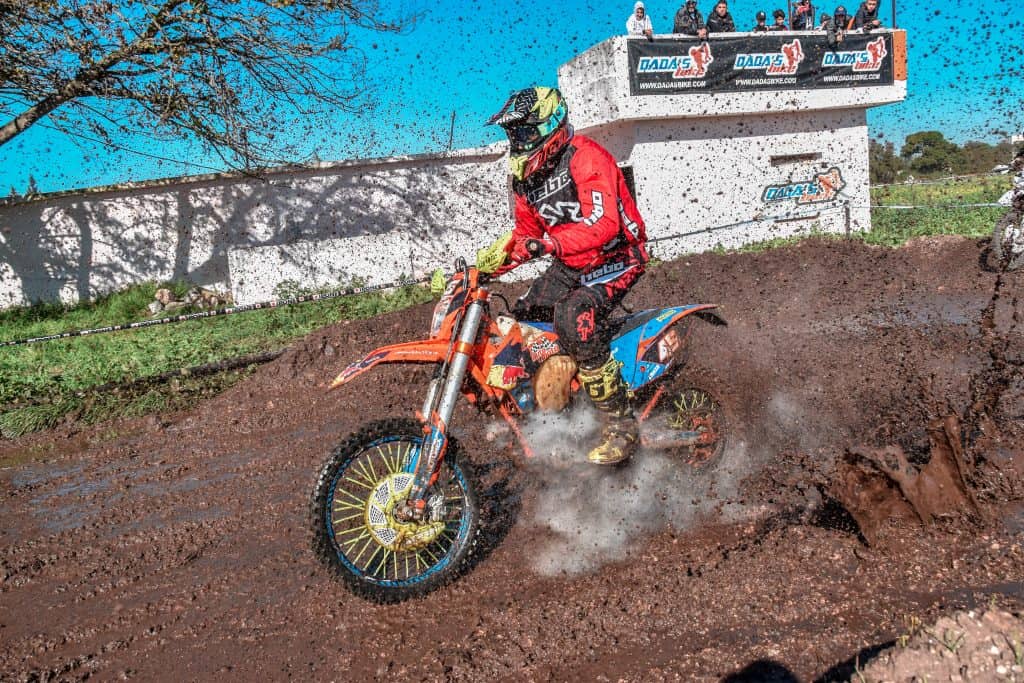
Rider Height vs. Seat Height Sizing Guide for Teenagers
The single most important rule in youth dirt bike selection is this: fit the bike to the child’s physical inseam, not their age on a calendar. In our garage, we enforce the “balls-of-the-feet” sizing principle. While seated centered on the saddle, the rider should be able to touch the balls of both feet firmly on the ground, or place one flat foot down while keeping the opposite boot resting securely on the footpeg.
| Teen Rider Height | Recommended Seat Height | Ideal Four-Stroke Trail Class | Ideal Motocross Track Class |
|---|---|---|---|
| Under 4’10” (Under 147 cm) | 28 to 30 inches | Honda CRF110F / Kawasaki KLX110R L | KTM 65 SX / Yamaha YZ65 |
| 4’10” to 5’2″ (147–157 cm) | 29 to 31.5 inches | Honda CRF125F / Kawasaki KLX140R | Yamaha YZ85 / Kawasaki KX85 |
| 5’2″ to 5’6″ (157–168 cm) | 31.5 to 33.5 inches | Honda CRF125F Big Wheel / TT-R125LE | Kawasaki KX112 / KTM 85 SX Big Wheel |
| 5’6″ to 5’9″ (168–175 cm) | 33 to 35 inches | Honda CRF250F / Kawasaki KLX230R | Honda CRF150R Expert / Yamaha YZ125 |
| Over 5’9″ (Over 175 cm) | 35 to 37.5 inches | Kawasaki KLX300R / Yamaha WR250F | Yamaha YZ125 / KTM 125 SX / 250F |
Top Trail and Recreational Dirt Bikes for 13-Year-Olds
Recreational trail bikes are engineered for reliability, low maintenance, and confidence building. They utilize mild-mannered, air-cooled four-stroke engines with wide gear ratios, electric start, and plush suspension designed to soak up roots, rocks, and backyard ruts without sudden power surges.
Honda CRF125F & CRF125F Big Wheel (The Benchmark Starter)
The Honda CRF125F is the undisputed king of youth trail bikes. Equipped with Honda’s electronic fuel injection (EFI), it eliminates the hard-starting carburetor headaches that plague older bikes on cold mornings. It features push-button electric start (with a backup kickstarter) and a 4-speed manual gearbox with a very forgiving clutch pull. Honda offers two versions: the Standard model (17-inch front / 14-inch rear wheels, 29.1-inch seat height) and the Big Wheel (FB) model (19-inch front / 16-inch rear wheels, 30.9-inch seat height), giving parents an exact fit regardless of the teen’s growth phase.
Yamaha TT-R125LE (The Reliable Electric-Start Trail Favorite)
Yamaha’s TT-R125LE has been a staple in backyards and state OHV parks for over two decades. The “LE” designation denotes full-size youth equipment: large wheels (19-inch front / 16-inch rear), a capable front disc brake, plush adjustable rear suspension, and electric start. Powered by an air-cooled 124cc SOHC four-stroke motor mated to a true 5-speed transmission, the TT-R delivers tractable, chugging low-end torque that climbs fire roads effortlessly without stalling.
Kawasaki KLX140R (Three Wheel Sizes for Growing Teens)
Kawasaki solved the youth sizing dilemma better than anyone by offering the KLX140R in three distinct frame iterations: the KLX140R (30.7-inch seat, 17/14 wheels), the KLX140R L (31.5-inch seat, 19/16 wheels), and the KLX140R F (33.9-inch seat, full-sized 21/18 wheels). Built around a rigid high-tensile steel perimeter frame with front and rear hydraulic disc brakes, the 144cc air-cooled engine offers just enough extra displacement to keep an adventurous teen satisfied for multiple seasons.
Suzuki DR-Z125L (Simple, Bulletproof Japanese Trail Machine)
For parents seeking traditional Japanese mechanical simplicity, the Suzuki DR-Z125L features a 124cc air-cooled single, 5-speed manual transmission, front disc brake, and 19/16-inch wheels with a 32.0-inch seat height. While it retains a traditional kickstarter rather than push-button electric start, its light 196-pound wet weight makes it simple to kick over and teaches teens foundational starting discipline.
Honda CRF250F & Kawasaki KLX230R (For Tall and Rapidly Growing Teens)
If your 13-year-old has already crossed the 5-foot-6 threshold and weighs over 130 pounds, buying a 125cc mini bike is a waste of money—they will cramp up within three months. Step up to an adult-framed, mild-mannered trail bike like the Honda CRF250F (34.8-inch seat height) or Kawasaki KLX230R (36.4-inch seat height). Both feature fuel-injected, air-cooled engines with smooth, mellow torque delivery and full-sized 21-inch front wheels that glide over trail obstacles.
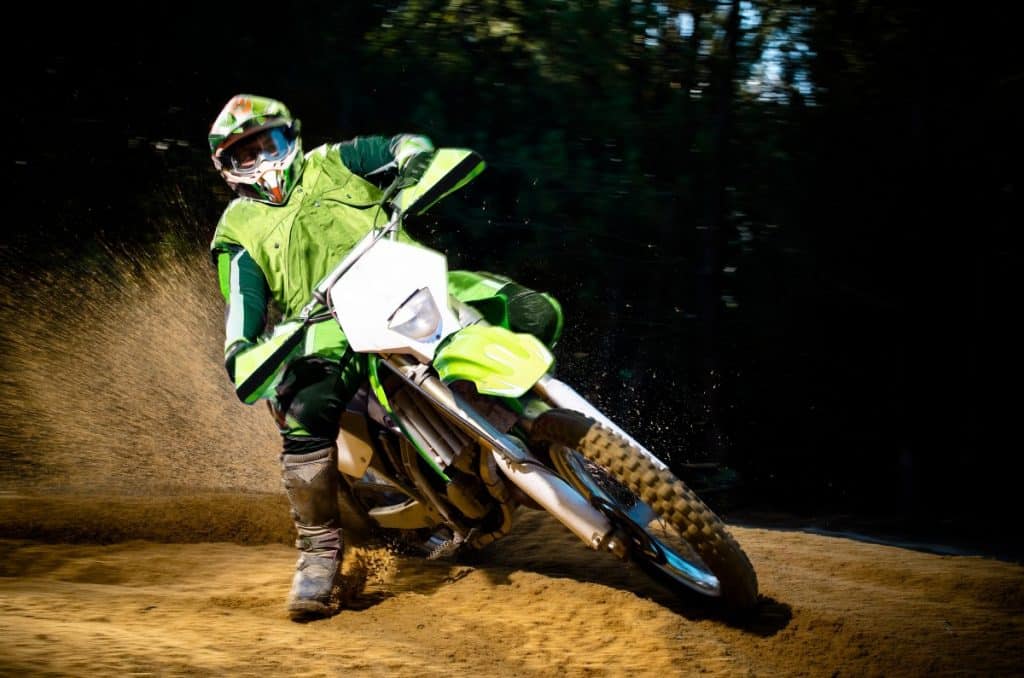
Top Youth Motocross and Competition Bikes for Experienced Teens
If your 13-year-old has years of riding experience and dreams of racing motocross, trail bikes will not cut it. Competition youth bikes feature high-strung, liquid-cooled two-stroke engines (or high-RPM four-strokes), stiff inverted suspension with 11 inches of travel, and powerband hits engineered for track jumps.
Yamaha YZ85 & YZ85LW (YPVS-Equipped Youth Track Sensation)
The Yamaha YZ85 is the cornerstone of youth amateur motocross. Powered by an 85cc liquid-cooled two-stroke engine equipped with the Yamaha Power Valve System (YPVS), it delivers a much wider, more tractable powerband than peaky older two-strokes. With fully adjustable KYB suspension and an aluminum subframe, it weighs an astonishingly light 161 pounds wet. The Large Wheel (LW) version provides taller ground clearance and a 34.8-inch seat for taller youth racers.
Kawasaki KX112 Supermini (The High-Displacement Stepping Stone)
Kawasaki introduced the KX112 specifically to bridge the intimidating gap between 85cc mini racers and full-sized 250cc machines. Displacing 112cc from a stroked, liquid-cooled two-stroke engine with exhaust power valves, the KX112 produces formidable low-end grunt to pull out of corners without clutching. Rolling on 19/16-inch wheels with Dunlop MX33 tires and a 34.3-inch seat height, it is the ultimate Supermini class weapon.
KTM 85 SX (Austrian Championship-Bred Youth Weapon)
KTM treats their youth lineup with the exact same engineering precision as their factory Supercross machines. The KTM 85 SX features a chromoly steel frame, Formula hydraulic clutch, WP XACT air forks that adjust to rider weight with a simple hand pump, and a high-compression 84.9cc cylinder. It is one of the fastest, most technologically advanced youth race bikes on earth.
Honda CRF150R & CRF150R Expert (The Only Four-Stroke Mini Racer)
While European and Japanese rivals stick to two-strokes for youth track racing, Honda created the revolutionary CRF150R: a purebred, liquid-cooled 149cc Unicam four-stroke racer revving past 14,000 RPM. Unlike mellow trail bikes, the CRF150R is a thoroughbred race machine with an aggressive Keihin FCR flat-slide carburetor, Showa inverted forks, and explosive acceleration. The Expert edition features big wheels and a 34.1-inch seat height.
Four-Stroke vs. Two-Stroke: Which Engine Is Right for Teen?
Choosing between two-stroke and four-stroke power is the biggest mechanical fork in the road for parents.
| Feature | Four-Stroke Trail (CRF125F, TT-R125, KLX140) | Two-Stroke MX (YZ85, KX112, KTM 85) |
|---|---|---|
| Power Delivery | Smooth, linear, predictable chug; hard to stall | Explosive “hit” on the pipe; demands active clutch work |
| Starting Method | Push-button electric start + backup kick | Kickstart only; requires proper technique |
| Fuel Prep | Straight pump gasoline (87 to 91 octane) | Requires premixing two-stroke oil (32:1 or 40:1) |
| Routine Maintenance | Oil changes every 15–20 hours; valve checks | Piston and ring top-end rebuilds every 25–40 hours |
| Best Environment | Backyard trails, woods, dual-sport fire roads | Prepared motocross tracks, jumps, aggressive sand |
| Beginner Friendliness | 10 / 10 (Highest safety margin) | 4 / 10 (Requires prior clutch & throttle control) |
Can a 13-Year-Old Ride a 250cc Dirt Bike?
This is the question every off-road parent asks when their teen starts hitting growth spurts. The honest answer depends entirely on which type of 250 you are considering.
Mild 250cc Trail Bikes (YES, with conditions)
Air-cooled trail bikes like the Honda CRF250F or Yamaha TT-R230 produce around 18 to 20 horsepower. If your 13-year-old stands at least 5-foot-7, can touch both feet down, and understands clutch control, a 250F trail bike is a phenomenal long-term investment that they won’t outgrow for years.
250cc Motocross Race Bikes (ABSOLUTELY NOT for beginners)
Liquid-cooled 250cc race bikes (YZ250F, CRF250R, KTM 250 SX-F) generate 42 to 47 horsepower, feature 38-inch seat heights, and hit highway speeds in seconds. Putting a 13-year-old novice on a 250 race bike creates extreme whiskey-throttle risks and leads to severe injuries. Keep them on a 125 or 140 until their riding fundamentals are rock-solid.
Essential Safety Gear and Hauling Equipment
FTC Disclosure: When you purchase through our links, we may earn an affiliate commission at no extra cost to you. We only recommend genuine, field-proven gear tested with our own families.
Fox Racing Youth Titan Sport Jacket
Unlike flimsy plastic roost guards that only deflect flying gravel, this full-mesh armored jacket provides CE-certified protection across the spine, chest, shoulders, and elbows. Breathable stretch-fabric chassis keeps young riders cool during hot trail sessions.
- Full CE-certified back and chest plate coverage
- Articulated spine protector moves naturally with rider
- Built-in elbow and forearm hard-shell guards
Rhino USA Motorcycle Tie-Downs with Soft Loops
A 13-year-old cannot legally ride on public highways, meaning parents must transport dirt bikes in truck beds or trailers. These heavy-duty cam-buckle straps feature integrated soft loops that prevent scratching handlebars and triple clamps.
- 3,328 lb certified laboratory break strength
- Integrated soft loops eliminate metal-on-metal rub
- Coated safety latch S-hooks won’t slip off anchor rings
100% Strata 2 Youth Motocross Goggles
Trail dust, hanging tree branches, and flying roost from other riders can cause permanent eye damage. The Strata 2 Youth goggles feature an ultra-wide field of view, anti-fog coated Lexan lenses, and plush dual-layer face foam designed specifically for youth face profiles.
- Anti-fog, scratch-resistant curved Lexan lens
- 40mm silicone-coated strap holds firmly on youth helmets
- Dual-layer moisture-wicking foam seals out fine dirt
Parent’s Pre-Ride Safety and Maintenance Checklist
Before releasing your teenager onto the trails, establish a consistent pre-ride garage routine together.
- Tire Pressure (12 to 14 PSI): Youth dirt bike tubes are vulnerable to pinch flats when riding over sharp rocks. Always check tire pressure with an accurate low-pressure gauge before loading up.
- Chain Slack (Two-to-Three Finger Rule): With the bike resting on its side stand, measure the chain slack midway between sprockets. You should be able to fit roughly three fingers between the swingarm slider and the bottom of the chain. A tight chain snaps countershaft bearings, while a loose chain derails and cracks engine cases.
- Throttle Snap Test: Turn the handlebars fully to the left lock and snap the throttle open and shut. Repeat at full right lock. The throttle must snap shut crisply with an audible metallic click. If it sticks or returns sluggishly, clean the throttle tube or lubricate the cable immediately.
- Spoke Tension: Take a small wrench or screwdriver and lightly tap each wheel spoke. A properly tensioned spoke rings with a clear musical ping; a loose spoke produces a dull, dead thud.
- Engine Oil Sight Glass: Four-stroke youth bikes carry less than a quart of motor oil. Check the sight glass or dipstick with the bike held perfectly upright on level ground. Running a youth bike half a quart low will overheat and seize the cylinder head within two rides.
For more detailed technical guidelines on maintaining youth engines, be sure to explore our comprehensive guides on powersports oil change fundamentals and factory fluid maintenance schedules.
Frequently Asked Questions
What is the best dirt bike for a complete 13-year-old beginner?
The Honda CRF125F (or CRF125F Big Wheel) and the Yamaha TT-R125LE are the best beginner dirt bikes for 13-year-olds. Both feature electric start, forgiving four-stroke power delivery, manual clutches with light pulls, and bulletproof Japanese reliability that allows new riders to build trail confidence without intimidation.
How tall should a 13-year-old be for a 125cc dirt bike?
A 125cc trail dirt bike fits riders between 4-foot-10 and 5-foot-4 with an inseam of at least 28 inches. Standard 125cc models have a seat height around 29 to 30 inches, while Big Wheel editions sit at roughly 31 to 32 inches. Riders should be able to touch the balls of both feet to the ground when seated.
Should I buy a 2-stroke or 4-stroke dirt bike for my 13-year-old?
For casual trail riding, backyard fun, and beginners, choose a four-stroke. Four-stroke trail bikes have smooth linear torque, push-button electric start, run on regular pump gas, and require simple oil changes. Only choose a two-stroke (like a YZ85 or KX112) if your teen has previous riding experience and plans to race competitive motocross on closed tracks.
How fast do dirt bikes for 13-year-olds go?
Standard 125cc to 140cc four-stroke trail bikes reach top speeds between 45 and 55 mph, though they are geared for low-end torque rather than outright speed. Competition two-strokes like the Yamaha YZ85 and Kawasaki KX112 can exceed 65 mph on track straightaways with explosive acceleration.