Pros and Cons of Owning a Dirt Bike (Cost & Maintenance)
Few outdoor pursuits match the pure visceral thrill of dirt biking. From cracking the throttle down open fire roads to carving through technical forest singletrack, dirt bikes deliver unmatched agility, heart-pumping speed, and a direct connection between rider and machine.
However, owning an off-road motorcycle involves far more than weekend fun. Unlike street motorcycles or casual bicycles, dirt bikes demand dedicated transport logistics, intensive recurring mechanical maintenance, strict land-use compliance, and a serious commitment to protective safety gear.
To help you make an informed decision before spending thousands of dollars, we break down the honest pros and cons of owning a dirt bike, complete with real-world operating costs, physical demands, and ownership realities.
Quick Buyer Diagnostic: Is a Dirt Bike Right for You?
You Should Buy a Dirt Bike If:
- You crave high-intensity cardiovascular and core fitness on rugged terrain
- You want to explore tight, technical singletrack trails where 4-wheelers cannot fit
- You have access to a pickup truck, van, or trailer for hauling non-street-legal OHVs
- You enjoy hands-on mechanical maintenance (oil changes, chain adjustments, air filters)
You Should Reconsider or Choose an ATV / Dual-Sport If:
- You need a street-legal machine to commute directly from your garage to work or trails
- You prefer relaxed utility, snow-plowing capabilities, or hunting work (an ATV excels here)
- You lack secure garage storage or time for frequent post-ride wash and maintenance routines
- You are uncomfortable with frequent low-speed balance drops and technical riding physical fatigue
Dirt Bike vs Trail ATV vs Dual-Sport
Prospective riders often weigh dirt bikes against all-terrain quad vehicles (ATVs) and dual-sport enduros. Understanding how these machines differ in terms of transport logistics, trail access, maintenance frequency, and physical intensity is crucial before choosing your platform. If you are debating between two wheels and four wheels, see our detailed breakdown on whether a dirt bike or an ATV is more fun for trail riding.
| Ownership Criterion | Off-Road Dirt Bike | Trail Quad / ATV | Dual-Sport Motorcycle |
|---|---|---|---|
| Trail & Terrain Access | Unlimited access; clears 50-inch gates and extreme singletrack | Limited to 50″+ double-track and designated ATV trails | Singletrack, fire roads, and public paved highways |
| Public Road Legality | Strictly off-highway only (OHV registration required) | Strictly off-highway only (limited road crossing permits) | 100% street-legal (DOT lights, mirrors, license plate) |
| Transport Logistics | Requires pickup truck bed, hitch carrier, or small trailer | Requires full-size pickup bed or dedicated utility trailer | Ride directly from your garage to off-road trails |
| Curb Weight & Agility | Ultra-light (190 – 250 lbs); agile obstacle hopping | Heavy (450 – 850 lbs); planted stability, low rollover recovery | Moderate (280 – 350 lbs); heavier on tight singletrack |
| Maintenance Intensity | High (clean air filter after every ride, oil every 10-15 hrs) | Moderate (seasonal diff fluids, belt checks, automotive-style) | Low to Moderate (oil changes every 2,000 – 3,000 miles) |
| Physical Demands | Intense full-body cardiovascular & core muscular workout | Upper body steering effort; seated stability | Moderate on trails; low effort on asphalt transit |
Major Advantages of Dirt Bike Ownership
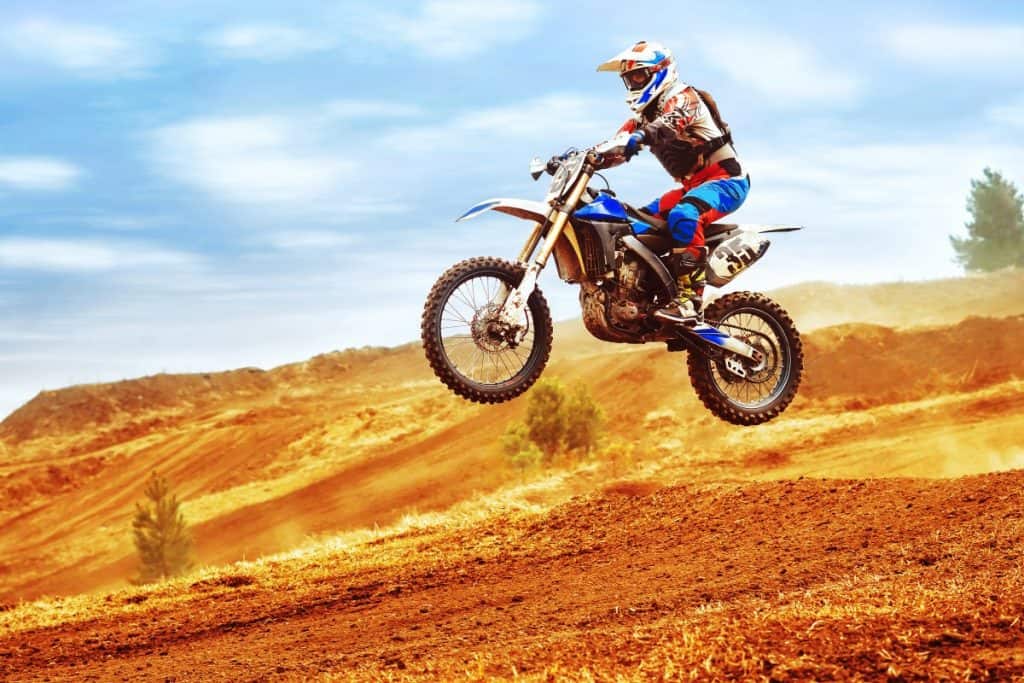
Owning a dirt bike unlocks a level of freedom and personal mastery that few other sports can match. The combination of lightweight design, high power-to-weight ratios, and responsive geometry produces clear advantages that keep millions of riders returning to the trails decade after decade.
Peak Physical Fitness and Core Body Conditioning
One of the most profound benefits of dirt bike riding is the incredible full-body workout it provides. Unlike cruising on a road motorcycle where the rider remains predominantly seated, riding off-road demands constant standing in the ‘attack position.’ Maneuvering a 220-pound motorcycle over rock gardens, sand whoops, and muddy ruts engages your core stabilizers, quadriceps, glutes, lats, and forearms simultaneously.
Heart rates during a spirited 45-minute trail session or motocross moto routinely hover between 140 and 175 beats per minute—matching the cardiovascular expenditure of competitive rowing, cycling, or soccer. Over several months of regular riding, dirt bikers experience noticeable increases in grip strength, reaction speed, postural endurance, and cardiovascular stamina.
Unrestricted Access to Scenic Wilderness Singletrack
Where ATVs, side-by-sides (UTVs), and 4×4 trucks are halted by trail width regulations, dirt bikes thrive. Most state forests, BLM public lands, and national OHV parks feature designated singletrack trails restricted to vehicles under 50 inches in width—and frequently narrower than 24 inches. A dirt bike can traverse knife-edge mountain ridges, weave through dense pine forests, and cross shallow boulder-strewn streams that are physically impassable to four-wheeled machines.
Mastery of Foundational Two-Wheel Riding Mechanics
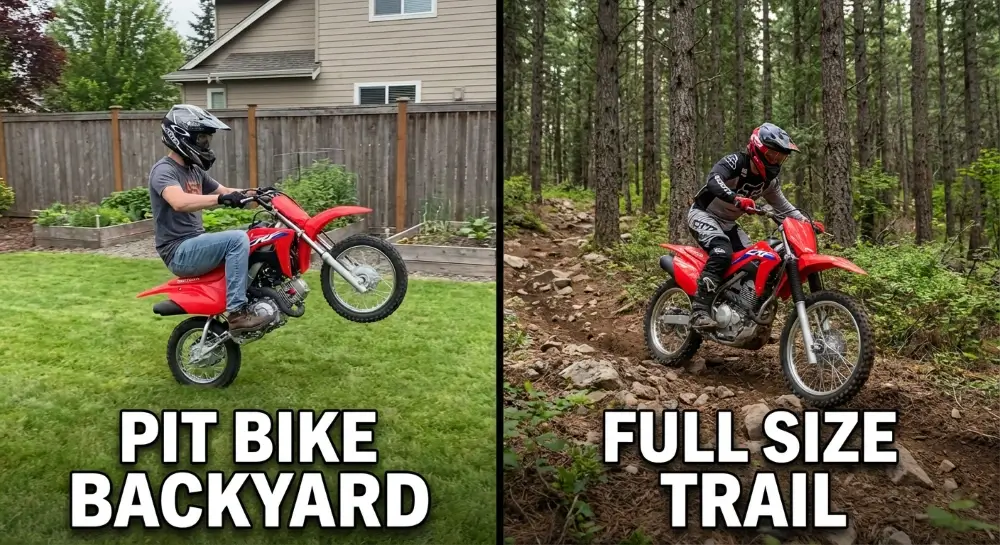
There is a well-known axiom in powersports: professional road racers and street motorcyclists who started on dirt bikes possess superior motorcycle control. Learning to ride on unpredictable dirt, mud, loose gravel, and wet roots teaches you how to manage traction loss instinctively. When the rear tire steps out on a dirt corner, an off-road rider learns to feather the throttle and counter-steer rather than panic and lock the brakes.
Mastering independent front and rear braking, clutch slipping, and body-weight shifting at safe trail speeds builds muscle memory that makes you an infinitely safer and more confident operator across any two-wheeled platform, from street bikes to adventure tourers.
Tight-Knit Family Community and Outdoor Camraderie
Dirt biking is rarely an isolated hobby. The off-road motorcycle culture centers around weekend trail camps, riding clubs, and community charity rides. Trailheads and motocross pits are filled with riders willingly lending tools, spare tubes, master links, and technical advice to fellow riders in need. For families, introducing children to mini dirt bikes fosters teamwork, mechanical curiosity, discipline, and healthy time away from digital screens.
Cons and Ownership Challenges
While the excitement of riding is undeniable, romanticizing the hobby without acknowledging its practical hurdles leads to buyer remorse. Understanding the logistical friction, recurring financial obligations, and security demands will prepare you for the realities of keeping a dirt bike in your garage.
Strict Off-Highway Status and Hauling Logistics
Pure off-road dirt bikes lack headlights, turn signals, mirrors, horn, and emissions equipment required by the Department of Transportation (DOT). In virtually every jurisdiction, riding an unregistered dirt bike on public residential streets, sidewalks, or paved highways is strictly illegal and subject to heavy fines or vehicle impoundment.
Unless you own acreage with private riding tracks, every trail ride requires hauling your bike to a designated OHV area. That means owning or borrowing a pickup truck with loading ramps, a utility trailer, or a hitch-mounted motorcycle carrier, along with industrial-grade tie-down straps. For secure transit, heavy-duty cam-buckle or ratchet straps such as Rhino USA Motorcycle Tie Down Straps are essential to prevent handlebar slippage and truck bed tipping on transit highways.
High Recurring Maintenance and Consumable Upkeep
Unlike automobiles that operate for 5,000 to 10,000 miles between oil changes, dirt bikes measure service intervals in engine running hours. High-performance 4-stroke and 2-stroke engines operate under extreme RPMs with small oil capacities (typically less than one quart). Engine oil and transmission fluid must be replaced every 10 to 15 hours of trail riding, or even sooner after dusty race conditions.
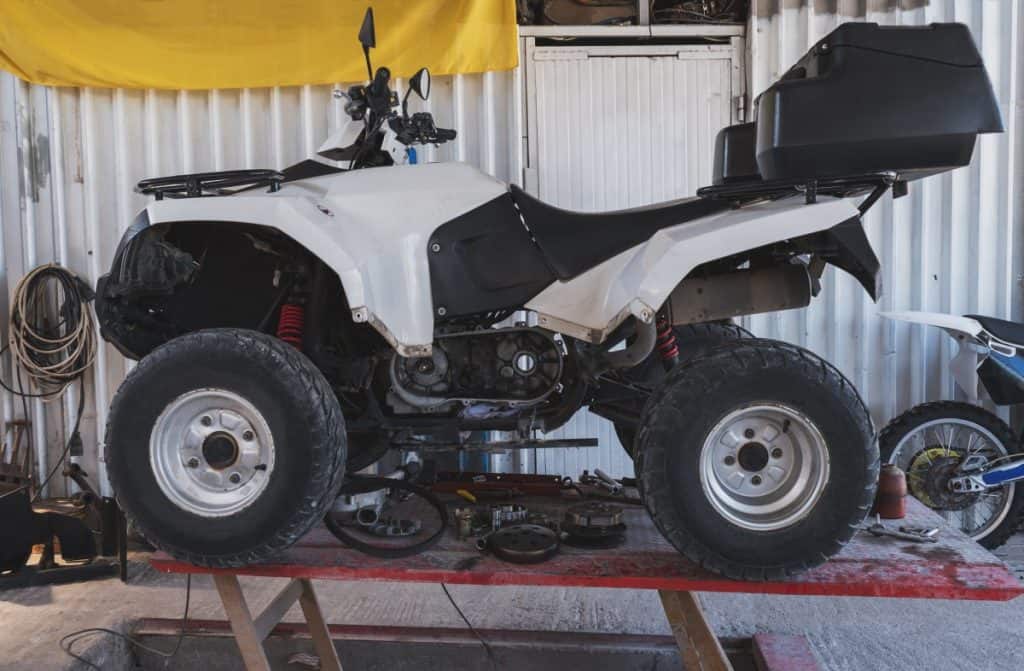
Furthermore, air filter maintenance is non-negotiable. Sucking sand or silt past a neglected filter can scour cylinder walls and destroy piston rings in a single afternoon. Learn how to wash and re-oil your foam element properly in our guide on how to clean the air filter in your dirt bike. Routine drive chain lubrication and degreasing using a dedicated kit like Maxima Chain Wax and Clean Combo is also required after every wash to avoid premature sprocket wear.
Elevated Injury Risk and Essential Protective Gear Investment
Gravity, high speeds, and unforgiving obstacles mean crashes are an inevitable reality of off-road riding. When you lose balance on a two-wheeler, there are no seatbelts, airbags, or roll cages to shield your body. Lower leg, ankle, and foot injuries represent the single most common orthopedic trauma among dirt bike riders due to foot-pegs, rock strikes, and machine tip-overs.
Never budget solely for the bike itself; high-level protective gear is mandatory. Investing in rigid, biomechanical hinged motocross boots like Alpinestars Tech 7 Enduro Boots provides vital torsion protection and ankle bracing against rotational hyperextension fractures. A Snell or ECE 22.06 certified off-road helmet, chest roost protector, goggles, and knee braces round out non-negotiable safety armor.
Severe Theft Vulnerability and Storage Requirements
Because dirt bikes rarely feature keyed ignition switches and weigh only 200 to 250 pounds, two thieves can physically lift an unlocked motorcycle into the back of a van or pickup bed in under thirty seconds. Moreover, off-road vehicles frequently lack titles in certain states, creating a thriving underground market for stolen parts and bikes.
If you are shopping the pre-owned market, always check the frame VIN against law enforcement registries before handing over cash. Follow our crucial checklist on how to know if a used dirt bike is stolen before you buy. At home, never leave a dirt bike parked in an open driveway or unmonitored carport; anchor it to concrete garage floor anchors with case-hardened steel chains.
Annual Dirt Bike Ownership Cost Breakdown
To avoid unexpected financial strain, here is a realistic breakdown of what a recreational trail rider spends during their first year of ownership, contrasting upfront investments against recurring operational costs.
| Expense Category | Item / Service Description | Estimated Year 1 Cost |
|---|---|---|
| Motorcycle Purchase | Reliable used Japanese trail bike (CRF250F, KLX230R) or new mini bike | $2,800 – $5,500 |
| Safety Armor & Gear | ECE/Snell helmet, Tech 7 boots, chest armor, goggles, gloves, pants | $850 – $1,400 |
| Hauling & Transport | Heavy-duty tie-down straps, aluminum loading ramp, hitch carrier or trailer rental | $150 – $450 |
| Routine Consumables | 4-5 oil changes, air filter oil/cleaner, chain wax, spark plugs | $180 – $300 |
| Wear Parts & Tires | One fresh rear tire, spare heavy-duty inner tubes, front brake pads | $150 – $280 |
| OHV Permits & Insurance | State OHV trail stickers, park day passes, comprehensive theft insurance | $120 – $250 |
| Total Year 1 Investment | Combined initial purchase + safety gear + first season riding | $4,250 – $8,180 |
Frequently Asked Questions
Is owning a dirt bike worth the money?
Yes, if you value outdoor adventure, rigorous full-body fitness, and hands-on mechanical hobbies. Japanese trail dirt bikes (like Honda CRF, Yamaha TT-R, and Kawasaki KLX models) hold resale value remarkably well, meaning you can ride for several seasons and recoup 70% to 80% of your initial purchase price upon resale.
How much does it cost annually to maintain a dirt bike?
For a recreational trail rider logging 40 to 60 engine hours per year, routine maintenance costs between $300 and $600 annually. This covers oil changes every 10-15 hours, air filter fluids, drive chain lubrication, one replacement rear knobby tire, and occasional spark plugs or brake pads.
Can you ride a dirt bike on the street legally?
Pure off-road dirt bikes cannot be legally ridden on public paved streets because they lack DOT-approved lighting, turn signals, mirrors, horns, and EPA highway emissions equipment. To ride on public streets, you must purchase a factory dual-sport motorcycle or undergo a strict state conversion process with proper title, registration, and inspection.
Are dirt bikes safer or more dangerous than ATVs?
Dirt bikes and ATVs present different injury profiles. Dirt bike riders experience more frequent low-speed drops and extremity scrapes, but their lightweight chassis allows the rider to separate cleanly from the bike during a crash. In contrast, 600-to-800-pound ATVs can cause catastrophic crush or rollover injuries if tipped on steep inclines.