Why Does Your Motorcycle Helmet Look So Big? The Reason & How to Fix It
Quick Answer: Why Does Your Helmet Look Like a Giant Mushroom?
If your motorcycle helmet looks cartoonishly huge in the mirror, here is the exact reason:
- Single or Dual Shell Molds (The #1 Cause): Budget helmet manufacturers use only 1 or 2 outer shell sizes for XS through XXL. If you wear an XS or Small, they place an XXL outer shell on your head and pack it with inches of extra foam, creating an extreme “bobblehead” appearance.
- Strict Safety Standards: Modern helmets require 1.2 to 1.8 inches of expanded polystyrene (EPS) foam to absorb high-speed deceleration forces required by DOT (FMVSS 218), ECE 22.06, and Snell M2020.
- Wrong Head Shape: If an Intermediate Oval rider forces their head into a Round Oval helmet, pressure at the forehead forces them to size up to a larger shell, making the helmet even bigger than necessary.
- The T-Shirt Illusion: Staring at your helmet in a bathroom mirror wearing a t-shirt exaggerates head proportions. Put on an armored motorcycle jacket with shoulder pads, and the visual ratio normalizes immediately.
Why Motorcycle Helmets Look Unusually Large
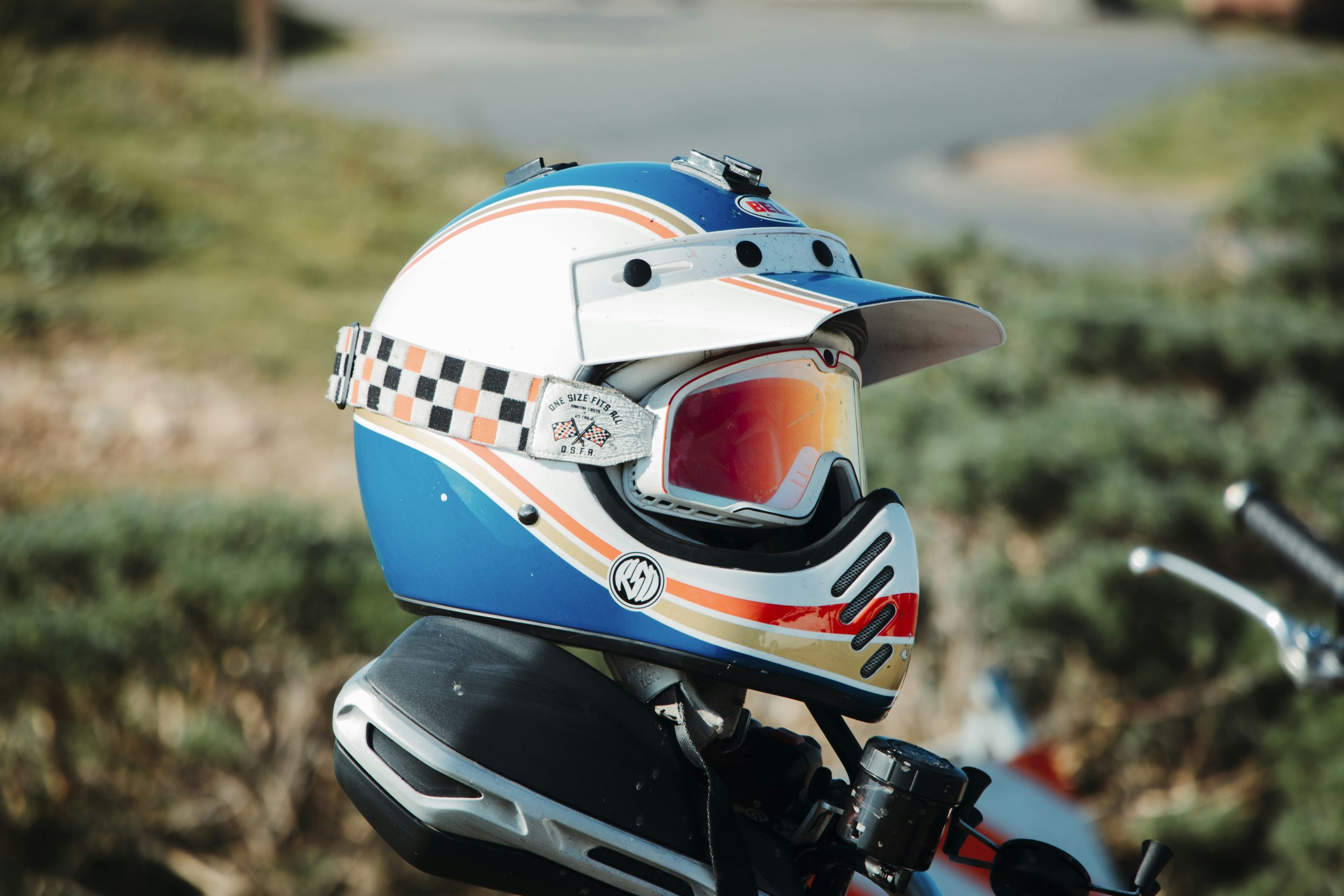
A motorcycle helmet is not a hat; it is a life-support deceleration chamber. Its job is to stretch the impact deceleration event from 2 milliseconds to 10 milliseconds. To absorb that kinetic energy, engineers require physical space—specifically, between 1.2 and 1.8 inches (30 to 45 mm) of crushable expanded polystyrene (EPS) foam sandwiched between your skull and the outer composite shell. When you add that thickness symmetrically around an average human head, your external head circumference expands from roughly 22 inches to over 31 inches.
However, while all certified helmets require protective foam, some helmets look noticeably more massive than others on the exact same person. That difference comes down to manufacturing economics and shell design.
Why Cheap Helmets Create the Bobblehead Look
The number one reason your helmet looks gargantuan is that the manufacturer took a cost-cutting shortcut known in the industry as single-shell or dual-shell molding.
Creating metal casting molds for helmet shells is extraordinarily expensive, running tens of thousands of dollars per mold. Budget helmet brands (frequently found under $120 on discount online marketplaces) cut costs by producing only one or two exterior shell sizes for their entire size spectrum from Extra Small (XS) to Double Extra Large (XXL).
Here is what happens behind the scenes: if a manufacturer uses only one outer shell mold, that shell must be large enough to accommodate an XXL head. When you order a Small or Extra Small, the manufacturer does not build you a smaller helmet. Instead, they take that massive XXL outer shell and line it with three inches of dense EPS foam to take up the empty space. You are literally walking around with an XXL exterior shell balanced on an XS head.
| Helmet Tier & Brands | Shell Molds Used | Shell-to-Size Distribution | Visual Bulk on Small/Medium Heads |
|---|---|---|---|
| Budget / Entry Level (Sub-$120 Amazon brands, basic polycarbonate) |
1 to 2 Shells | Shell 1: XS to M Shell 2: L to XXL (often just 1 shell for all sizes) |
Severe Bobblehead Effect. XS/S riders carry the exterior dimensions of a Large/XL helmet. |
| Mid-Range Value (Bell, HJC, Scorpion, LS2) |
3 Shells | Shell 1: XS–S Shell 2: M–L Shell 3: XL–XXL |
Proportionate & Compact. Significantly reduced exterior profile for Small and Medium riders. |
| Premium / High-End (Shoei, Arai, AGV, Schuberth) |
4 to 5 Shells | Dedicated individual shell sizes for XS, S, M, L, and XL–XXL | Ultra-Low Profile. Outer shell is tightly tailored to actual skull dimensions; zero wasted volume. |
By contrast, premium manufacturers like Shoei, Arai, and higher-tier Bell models invest in 4 to 5 unique shell molds. When you purchase a Small Shoei RF-1400, you receive a dedicated small outer shell that hugs your skull contours tightly, instantly eliminating the giant mushroom look.
If you are exploring lightweight street machines to pair with your gear, check out our field-tested breakdown of the 20 best 250cc motorcycle models, where compact bike dimensions make helmet proportions even more visually critical.
Safety Standards and EPS Liner Thickness
The safety certification stamped on the back of your helmet directly dictates its physical volume. Different safety rating agencies require different impact energy management protocols, which determines how thick and dense the protective foam must be.
| Certification Standard | Impact Testing Protocol | EPS Foam Requirement | Impact on Exterior Shell Bulk |
|---|---|---|---|
| DOT (FMVSS 218) United States Legal Minimum |
Two drop tests on flat/curved anvils; manufacturer self-certified. | Single-density medium-thickness EPS liner (approx. 25–30 mm). | Moderate. Some novelty-style half helmets abuse DOT loopholes with ultra-thin, unsafe shells. |
| ECE 22.06 Current European Standard |
Low-, medium-, and high-speed impacts plus rotational oblique brain shear tests. | Multi-density EPS with variable firmness zones across the skull. | Optimized. Multi-density foam absorbs rotational energy without adding excessive outer diameter. |
| Snell M2020D / M2020R Racetrack Independent Standard |
Repeated extreme impacts at the exact same point against steel edge anvils. | Denser, thicker EPS foam liner engineered for extreme velocity track crashes. | Noticeably Bulkier. Requires thicker EPS liners and stiff shells, slightly increasing overall outer dimensions. |
Under the older DOT standard (FMVSS 218), testing allows single-density foam, but because enforcement relies on random post-market testing, some low-budget helmets use overly bulky, low-tech polystyrene to ensure they pass. Meanwhile, the latest ECE 22.06 standard tests for rotational oblique acceleration (the twisting force that causes brain shear injuries) across varying drop speeds. This requires multi-density EPS liners, which allows manufacturers to distribute impact energy more efficiently in a sleeker aerodynamic profile.
Snell-certified helmets (M2020D) undergo high-energy double-strike testing on steel anvils. To prevent bottoming out during extreme second impacts, Snell helmets often feature denser, stiffer foam liners, which slightly increases exterior shell volume compared to pure ECE-rated lids.
Head Shape Mismatch
Another major reason riders end up with a cartoonishly oversized helmet is purchasing the wrong internal head shape. Human skulls generally fall into three distinct anatomical categories when viewed from above.
- Long Oval: Noticeably longer from front to back (forehead to back of skull) and narrow across the temples.
- Intermediate Oval (Most Common): Slightly longer front-to-back than side-to-side (approximately 80% of North American and European riders).
- Round Oval: Roughly equal width and length from front-to-back and ear-to-ear.
Here is where the sizing mistake happens: if an Intermediate Oval rider buys a Round Oval helmet, the helmet will aggressively pinch their forehead and the back of their skull while leaving loose air pockets at the temples. Believing the helmet is “too small” because of the painful forehead hot spot, the rider exchanges it for a size Large or XL.
Now, the pressure point is gone, but the entire helmet shell is a full size too large. The helmet wobbles on the highway, catches buffeting wind, and looks twice as wide on their head as it should. Matching your head shape correctly allows you to wear your true, compact shell size without agonizing pressure points.
Visual Proportion
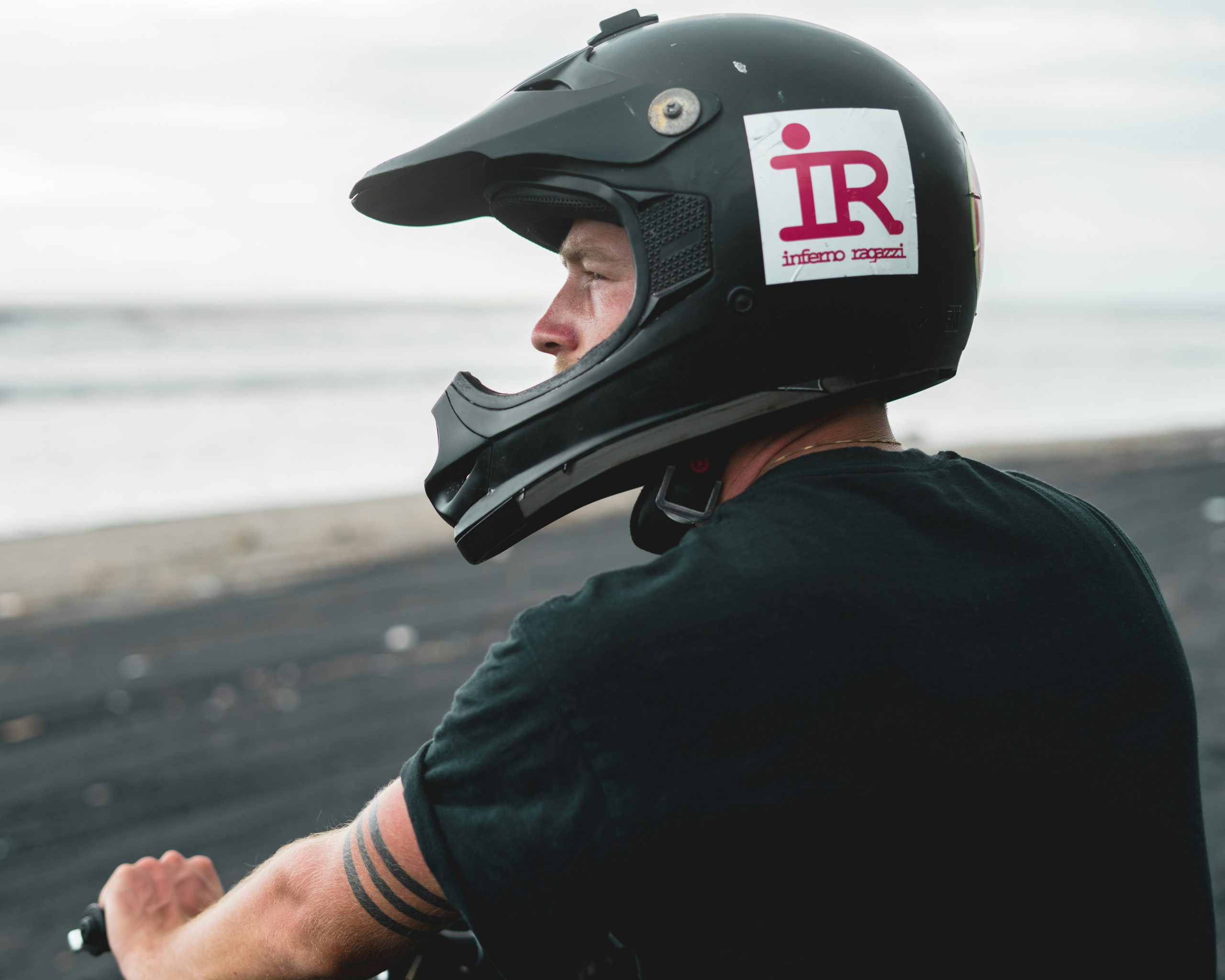
Before you return your helmet in frustration, consider the context of where you are looking at it. Ninety percent of riders who complain about a bobblehead look are standing in a bathroom or bedroom wearing a thin t-shirt.
A full-face motorcycle helmet adds roughly 4 to 5 inches of visual width to your head. When perched on top of bare, narrow shoulders in a t-shirt, the visual ratio between head diameter and torso width is completely unnatural. Your eye naturally reads it as a giant lollipop or mushroom.
Now, put on your full riding gear: a heavy leather or textile motorcycle jacket equipped with CE Level 2 shoulder armor and a back protector. The armor broadens your shoulder line by 3 to 4 inches and builds visual chest mass. Instantly, the helmet looks perfectly proportioned, aggressive, and integrated with your body.
This same sizing and proportion principle applies when outfitting younger riders for off-road trails. If you are fitting teenage riders with safety gear, consult our comprehensive guide on the best dirt bikes for 14-to-18-year-olds, where we break down proper rider inseam, seat height, and helmet sizing.
How to Check If Your Helmet Is Actually Too Big
While an aesthetic mushroom look is annoying, riding with a helmet that is physically too large is life-threatening. A loose helmet will twist sideways in crosswinds, lift off your forehead at highway speeds, and can rotate completely off your head during an impact. Perform these three garage fitment checks to verify your size:
The Crown Snugness and Forehead Pressure Test
Fasten the chinstrap securely. The top crown of the helmet should sit 1 to 2 finger widths above your eyebrows. Reach up with both hands, grip the chin bar firmly, and attempt to rotate your head inside the helmet from left to right. Your head should not turn freely inside the padding. Instead, your facial skin and cheeks should move with the helmet. If the helmet slides across your skin without dragging your cheeks, the shell is too large.
The Roll-Off and Jaw Movement Check
With the chinstrap cinched tight, reach behind your head and pull forward and upward on the rear base of the helmet with significant force. If the helmet rolls forward and slips over your eyes or off your head, the retention geometry and neck roll are oversized. Next, open and close your mouth: a properly fitted new helmet should force your cheeks into light contact with your molars, making it difficult to chew gum without biting your inner cheeks.
Safe Ways to Reduce Helmet Bulk Without Compromising Safety
If you want to slim down your helmet profile, there are proven, safe methods—and one extremely dangerous mistake you must avoid at all costs.
Why You Must Never Carve or Shave EPS Foam
Some ill-advised internet forums suggest taking a spoon, sandpaper, or razor blade to shave down the internal foam liner to make a helmet sit lower or fit tighter. Never, under any circumstances, crush, shave, or cut the EPS foam liner.
The crushable foam liner is precisely engineered with specific bead density to absorb kinetic impact. Shaving the foam creates structural weak points, eliminates the deceleration buffer, and can cause the outer shell to puncture straight through to your skull during a crash. Doing so voids all DOT and ECE certifications and turns a safety device into a dangerous plastic bucket.
Swapping OEM Cheek Pads and Crown Liners
The correct way to adjust internal fit is by customizing the removable comfort padding. Premium manufacturers design their cheek pads and crown liners to be interchangeable within the same shell size. For example, if your helmet shell fits your skull perfectly but feels loose on your jawline, you can install 5 mm thicker OEM cheek pads to achieve a locked-in, secure fit without jumping up to a larger exterior shell.
Selecting Low-Profile Multi-Shell Helmets
If your current helmet is simply an outdated single-shell bucket, the permanent solution is upgrading to a helmet engineered with dedicated small shells and fiberglass or carbon fiber composites. Carbon fiber and advanced multi-axial fiber weaves offer immense tensile strength, allowing engineers to build thinner, lighter shell walls compared to bulky injection-molded ABS plastics.

Recommended Low-Profile Helmets and Fitment Gear
Disclosure: The Dirt Rider’s Way is reader-supported. When you purchase through links on our site, we may earn an affiliate commission at no extra cost to you.
Bell Qualifier DLX MIPS Helmet
Engineered with 3 dedicated shell sizes across the range, eliminating the bobblehead look for small and medium riders while delivering integrated MIPS rotational impact protection.
ILM 902 Modular Dual-Visor Helmet
Aerodynamically contoured modular design featuring a flip-up chin bar, drop-down sun shield, and sculpted contours that reduce visual mass without sacrificing DOT impact compliance.
Alpinestars Touring Balaclava
Moisture-wicking, breathable head liner that prevents hair snagging, eliminates minor pressure hot spots, and allows a properly snug helmet to slide on and off smoothly.
Frequently Asked Questions
Why does my motorcycle helmet make me look like a bobblehead?
The primary reason is that your helmet was built using a single outer shell mold for multiple sizes. Budget manufacturers produce an XXL shell and fill it with extra inches of thick EPS foam to fit a Small or Medium head. Additionally, viewing yourself in a mirror while wearing a t-shirt exaggerates the ratio between your narrow bare shoulders and the outer shell.
Can I shave or compress the inside foam to make my helmet fit better?
No, absolutely never carve, compress, or shave the expanded polystyrene (EPS) foam liner. The EPS foam is the only component absorbing impact kinetic energy before it reaches your skull. Compressing or removing foam permanently destroys its shock-absorbing capacity and can lead to fatal skull fractures during a crash. To adjust fit, swap the removable comfort cheek pads instead.
Which motorcycle helmet brands have the smallest outer shell profile?
Brands that manufacture 4 to 5 unique shell sizes across their lineup offer the lowest exterior profile. Premium models from Shoei (such as the RF-1400), Arai, Bell (Qualifier series with 3 shells), and Scorpion provide dedicated smaller shells for XS, S, and M riders rather than putting small heads into massive universal shells.
How tight should a motorcycle helmet actually feel on my face?
A brand-new helmet should feel uncomfortably snug, squeezing your cheeks like a chipmunk so that chewing gum causes you to lightly bite your inner cheeks. The crown must sit firmly against your scalp without shifting when you shake your head. Comfort padding breaks in and loosens by roughly 15% to 20% within the first 15 to 20 hours of riding.