What Is a Wet Clutch in an ATV? (How It Works & Oil Warning Guide)
If you wonder why standard 10W-40 motor oil costs $6 a quart while powersports oil costs $14, the answer comes down to three words: the wet clutch. Pouring ordinary automotive motor oil into an ATV with a wet clutch is the fastest, most expensive way to glaze your friction plates and leave your machine slipping on the trail.
⚡ Quick Answer: What Is an ATV Wet Clutch?
An ATV wet clutch is a clutch assembly submerged directly in circulating engine motor oil. The oil serves two vital roles: continuous cooling to dissipate friction heat and controlled lubrication to extend plate life. Unlike dry clutches found in cars or Polaris/Can-Am snowmobile-style CVTs, an ATV wet clutch strictly requires JASO MA or MA2 certified oil. Using car motor oils containing moly or “Energy Conserving” friction modifiers permanently glazes wet clutch pads, leading to catastrophic slipping.
How an ATV Wet Clutch Actually Works (Under the Side Case)
Many riders assume every ATV has the exact same transmission layout.
In reality, powersports engineering splits four-wheelers into three distinct drivetrain architectures.
Centrifugal Wet Clutch with CVT (Yamaha, Suzuki, Kawasaki)
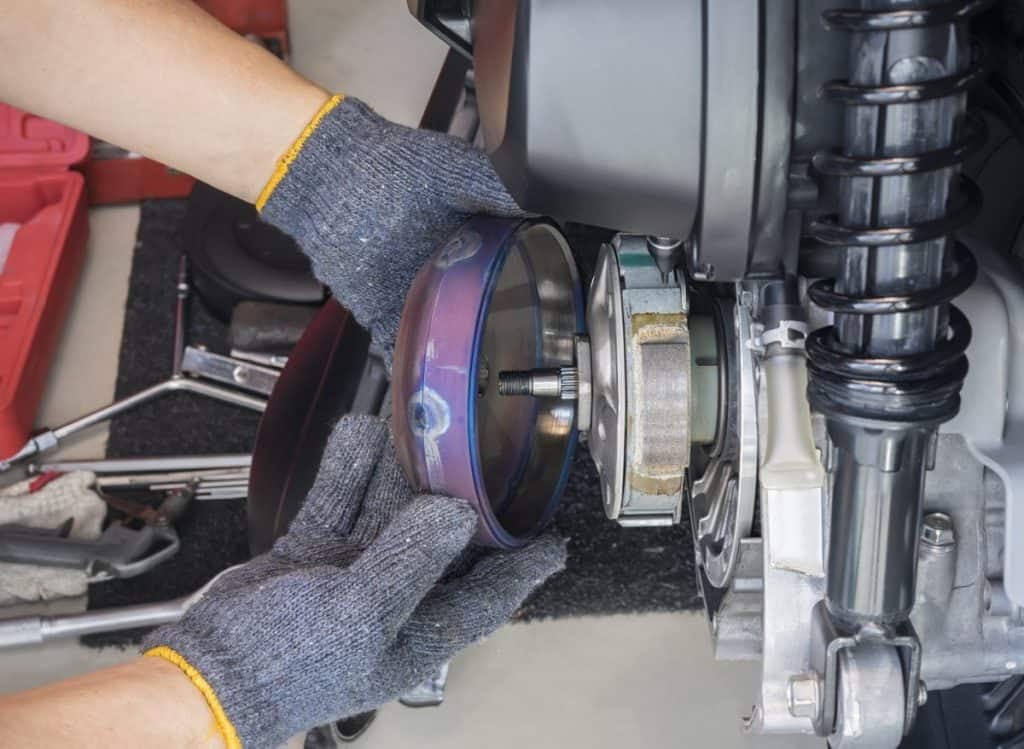
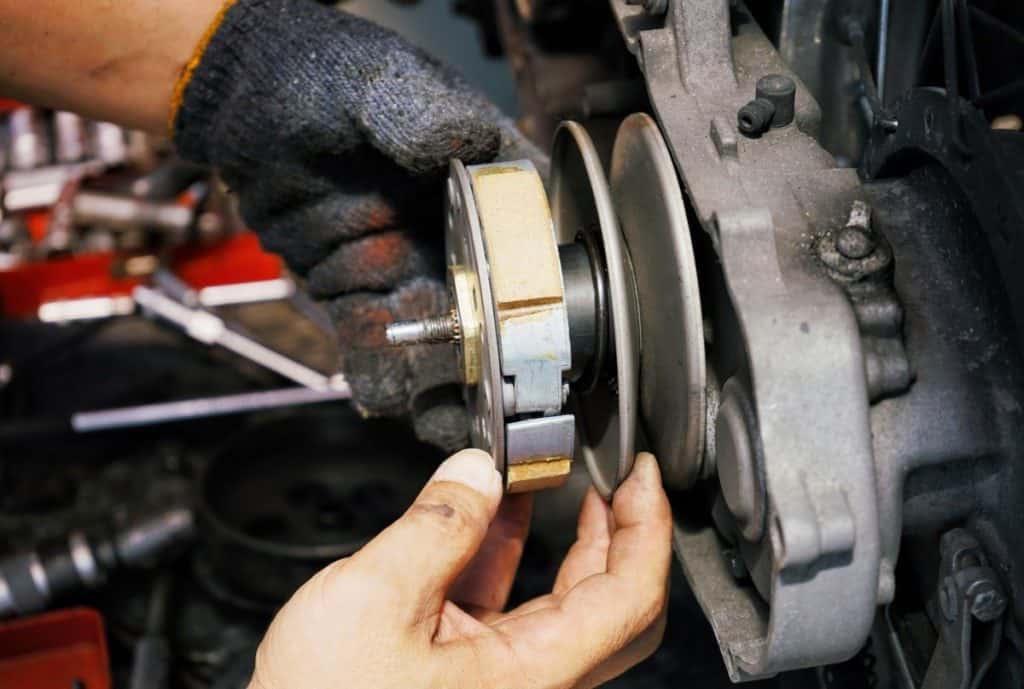
Found on the majority of Japanese utility quads. A weighted clutch carrier sits inside a sealed clutch drum bathed in engine oil. As engine RPM rises, centrifugal force swings weighted shoes outward against the drum, smoothly transferring power to the drive belt. Because the wet clutch handles takeoff slipping in oil, the external rubber CVT belt remains continuously clamped under tension, virtually eliminating belt burns.
Multi-Plate Manual Wet Clutch (Sport Quads & Dirt Bikes)
Found on manual-shift machines like the Yamaha Raptor 700, YFZ450R, and Honda TRX450R. This setup uses a clutch basket holding alternating steel drive plates and fiber friction plates pressed together by heavy-duty coil springs. Squeezing the handlebar lever pulls a pushrod to separate the plates, interrupting power to change gears.
Dry CVT Clutches (Polaris & Can-Am)
Most North American utility quads (Polaris Sportsman, Can-Am Outlander) do not use a wet clutch at all. Their primary drive clutch is completely dry, utilizing weighted flyweights and a spring inside an air-cooled plastic belt housing to pinch the drive belt directly.
The Sprag (One-Way) Bearing is The Heart of All-Wheel Engine Braking
Inside an ATV wet centrifugal clutch, nestled between the clutch carrier and the outer drum, sits a specialized component known as the sprag bearing (or one-way clutch bearing).
When you press the throttle, the bearing freewheels, allowing the shoes to engage the drum naturally. But the instant you let off the throttle descending a steep, rocky trail, the sprag bearing locks in the reverse direction. This locks the wheels mechanically to engine compression, delivering seamless, downhill 4-wheel engine braking without touching your hand brakes.
Wet Clutch vs. Dry Clutch
Understanding the mechanical tradeoffs between wet and dry systems explains why Japanese utility quads favor oil-submerged clutches while open-class sport side-by-sides often use dry CVTs.
| Feature | Wet Clutch (ATV Utility / Sport) | Dry Clutch (Polaris/Can-Am Belt or Dry Multi-Plate) |
|---|---|---|
| Cooling Medium | Circulating engine motor oil | Ambient airflow through snorkel vents |
| Engagement Feel | Ultra-smooth, progressive, zero abrupt shudder | Snappy, direct bite; prone to belt jerk at low crawl |
| Service Lifespan | 5,000 to 15,000+ trail miles with proper oil | 1,500 to 3,500 miles (belt & primary puck wear) |
| Belt Slip Risk | Virtually zero (belt remains under constant tension) | Moderate to high when crawling under heavy loads |
| Maintenance Access | Requires draining engine oil and removing side case | Accessible by pulling external plastic clutch cover |
| Oil Compatibility | Strictly JASO MA / MA2 only | Independent of engine oil (belt runs dry) |
Which ATVs Have a Wet Clutch? (OEM Brand Breakdown)
One of the most dangerous misconceptions on trail forums is the claim that “all four-wheelers use wet clutches.”
Here is exactly where major manufacturers stand across their flagship models.
| Brand & Family | Drivetrain Setup | Wet Clutch Present? | Recommended Oil Standard |
|---|---|---|---|
| Yamaha Grizzly & Kodiak (450, 700) | Ultramatic Centrifugal Clutch + Constant Tension CVT | YES (Internal Wet Clutch) | JASO MA / MA2 (10W-40) |
| Yamaha Raptor 700 / YFZ450R | 5-Speed Manual Multi-Plate | YES (Wet Multi-Plate) | JASO MA / MA2 (10W-40 / 20W-50) |
| Suzuki KingQuad (400, 500, 750) | Centrifugal Wet Clutch + V-Belt CVT | YES (Internal Wet Clutch) | JASO MA (10W-40) |
| Kawasaki Brute Force (300, 750) | Centrifugal Wet Clutch (300/750) + CVT | YES (Internal Wet Clutch) | JASO MA / MA2 (10W-40) |
| Honda FourTrax / Rancher / Foreman | Centrifugal Wet Clutch + Foot/Electric Shift or DCT | YES (Internal Wet Clutch) | JASO MA (Pro Honda GN4 10W-40) |
| Polaris Sportsman (450, 570, 850, 1000) | PVT Dry Centrifugal Primary Clutch + Belt | NO (100% Dry System) | Polaris PS-4 (Engine separated from belt) |
| Can-Am Outlander & Renegade | pDrive / QRS Dry Primary & Secondary CVT | NO (100% Dry System) | XPS 4T Synthetic (Dry belt drive) |
Why Car Oil Destroys Wet Clutches?
Never pour modern automotive engine oil into an ATV with a wet clutch. The reason lies in chemical additive packages regulated by the American Petroleum Institute (API).
Passenger car motor oils (labeled API SN, SP, or ILSAC GF-6) are engineered to maximize passenger vehicle fuel economy. To achieve this, oil chemists pack them with soluble molybdenum (“moly”), boron, and specialized chemical friction modifiers. In a car engine, these compounds form a microscopic, ultra-slippery sacrificial layer over metal pistons and cylinder walls.
However, when those exact same friction modifiers contact the porous cellulose, Kevlar, or carbon fiber pads of an ATV wet clutch, disaster strikes.
- Microscopic Impregnation: Molybdenum embeds deeply into the microscopic pores of the fiber friction material.
- Loss of Static & Dynamic Friction: The coefficient of friction drops below the mechanical threshold required to transfer torque under load.
- Glazing & Thermal Burn: As the clutch slips against the steel drum or pressure plate, friction heat skyrockets past 450°F (232°C), baking the oil residue into a rock-hard, slick glaze. Once glazed, simply changing back to motorcycle oil will not reverse the damage—the clutch shoes or plates must be mechanically replaced.
To prevent this, the Japanese Automotive Standards Organization established the JASO T 903 standard.
- JASO MA / MA1: High dynamic friction threshold, strictly prohibiting slip-inducing friction modifiers. Safe for wet clutches.
- JASO MA2: The highest friction rating available, engineered specifically for high-torque big-bore quads, heavy towing, and aggressive trail use.
- JASO MB: Low-friction formula meant strictly for dry-clutch scooters. Never use JASO MB in a wet clutch ATV.
5 Symptoms of a Failing or Slipping ATV Wet Clutch
Catching wet clutch wear early prevents scorched clutch drums and prevents loose friction fibers from clogging your oil pump pickup screen. Watch for these five warning signs:
High RPM Rev Flaring with Poor Acceleration
When you pin the throttle, the engine screams to high revs, but the quad accelerates sluggishly like a slipping automatic transmission.
Total Loss of Downhill Engine Braking
If your quad suddenly freewheels down steep hills at idle rather than holding a steady, controlled crawl, your internal one-way sprag bearing has worn out or seized.
Burnt, Acrid Engine Oil Smell
Slipping clutch shoes generate intense local heat, rapidly degrading oil additives. If your dipstick smells like burnt electrical wiring or scorched brake pads, your clutch is overheating.
Metallic or Fiber Glitter in the Oil Filter
During an oil change, inspect the pleats of your oil filter. Bronze-colored flakes or soft black fiber sludge indicate decomposing friction pads.
Jerky Takeoff or Harsh Low-Speed Shudder
If the quad violently chatters or grabs unevenly right off idle, the clutch shoes are unevenly worn or the return springs have weakened.
Recommended Tools & Fluids for Wet Clutch Maintenance
FTC Disclosure: When you purchase through our links, we may earn an affiliate commission at no extra cost to you. We only recommend genuine, proven products tested in our shop.
Motul 7100 4T 10W-40 Synthetic (4L)
Formulated with 100% Ester synthetic base stocks and certified to JASO MA2 standards. Provides supreme shear resistance under high oil temperatures and maximum dynamic clutch grip to eliminate slipping under heavy loads.
- Full 100% Ester synthetic formulation
- Certified API SP & JASO MA2 wet clutch safe
- Superior gearbox shear protection
Yamaha Yamalube 10W-40 All-Purpose 4T (1 Gallon)
The exact factory OEM fluid engineered for Yamaha Ultramatic drivetrains, Suzuki KingQuads, and Kawasaki Brute Forces. Contains mineral base oils combined with shear-stable polymers and zero friction modifiers to protect centrifugal clutch drums.
- OEM factory formula for Yamaha Ultramatic
- Certified JASO MA anti-friction modifier standard
- Resists thermal breakdown in heavy utility hauling
Motion Pro 08-0008 Clutch Holding Tool
Attempting to torque down an ATV clutch hub center nut using an impact gun or a screwdriver wedged in the gears often cracks expensive cast aluminum basket tangs. This adjustable vice-grip tool locks inner clutch hubs and wet drums securely.
- Prevents breaking delicate aluminum clutch fingers
- Adjustable 8mm spanner pins fit multi-plate & centrifugal hubs
- Hardened carbon steel jaws with locking clamp
How to Service and Inspect an ATV Wet Clutch
If you’ve identified slipping shoes or plan to rebuild your clutch pack, keep these pro shop principles in mind.
Always Soak New Friction Plates in Oil First
If you install dry fiber plates and immediately fire the engine, the initial engagement can burn the friction material before oil pressure circulates. Soak new multi-plate fibers or centrifugal shoes in fresh JASO MA oil for at least 15 to 30 minutes prior to assembly.
Measure Clutch Drum Inside Diameter (ID)
Centrifugal wet clutch drums develop grooves over thousands of hours. Always measure the inner drum surface with vernier calipers against your factory service manual’s wear limit. A grooved drum will chew through new clutch shoes in just a few rides.
Verify Sprag Bearing Direction Before Torquing
Installing a one-way sprag bearing backwards is a classic garage blunder. When installed backwards, the quad will freewheel under forward power and violently lock the engine when you roll backward! Test rotation by hand: the clutch carrier should spin smoothly in one direction and immediately lock tight in the opposite direction.
Replace the Side Case Gasket and Crush Washers
Never reuse an old paper side-case gasket with silicone RTV sealant. Stray silicone beads can break off inside the crankcase, migrate through the oil passages, and starve the crankshaft journals. Always use a genuine OEM replacement gasket.
For more detailed step-by-step fluid service intervals, check out our companion guides on how to change the oil on an ATV and how often to change ATV fluids based on OEM factory schedules.
Frequently Asked Questions
Can I use automotive 10W-40 oil in my wet clutch ATV?
No. Modern passenger car motor oils contain molybdenum and friction-reducing additives labeled Energy Conserving or Resource Conserving. These friction modifiers impregnate the wet clutch fiber pads, causing irreversible slipping and glazing under load. Always use oil labeled JASO MA or JASO MA2.
Does a Polaris Sportsman have a wet clutch?
No. Polaris Sportsman models utilize a 100% dry Continuously Variable Transmission (PVT). The primary drive clutch operates completely dry in an air-cooled belt housing separate from engine motor oil.
How long does an ATV wet clutch last?
With regular oil changes using certified JASO MA or MA2 oil, a utility ATV wet centrifugal clutch easily lasts between 5,000 and 15,000 miles (or 500 to 1,000 operating hours). Extreme mud riding, heavy towing beyond capacity, or using improper automotive oil can destroy a wet clutch in under 100 miles.
Can I fix a slipping wet clutch without replacing it?
If the clutch slipped solely due to accidentally pouring automotive car oil, draining the oil immediately, flushing the crankcase with cheap JASO MA oil, and refilling with fresh JASO MA2 oil occasionally restores grip if the plates were not severely glazed. However, if the friction shoes have worn past their service limit or burned black, the clutch assembly must be replaced.