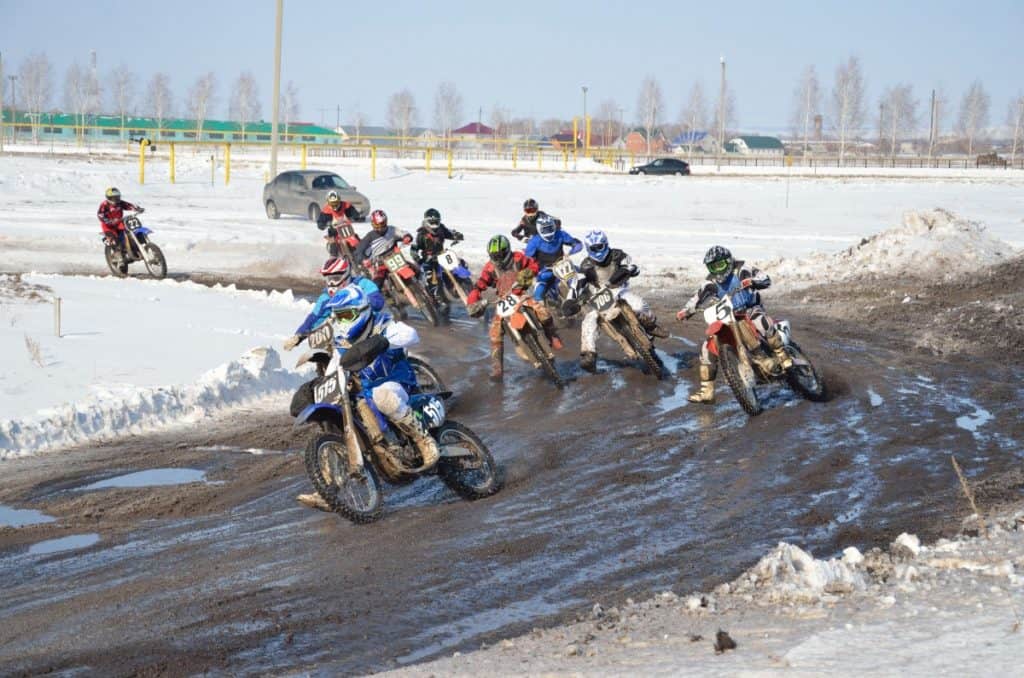
Is a Dirt Bike or ATV More Fun? (The Showdown)
The trailhead tells the whole story. On one side, you have the dirt bike guy. He’s soaking wet with sweat, he just spent ten minutes kicking a carbureted 250 two-stroke to life, and he looks exhausted. On the other side, the ATV guy is sitting on a plush seat, sipping a Gatorade, and checking his GPS while his machine idles effortlessly.
It looks like the ATV rider is having a better time. But talk to them after the ride. The dirt biker has a look in his eye—a mix of terror and triumph—that the quad rider just doesn’t have. Choosing between two wheels and four isn’t just about how many tires you buy; it is about what kind of suffering you enjoy.
If you want a physically demanding sport that offers the “flow state” of leaning into turns and mastering technical skills, a dirt bike is more fun. If you prefer a social experience where you can conquer deep mud, haul gear, and relax without worrying about balance, an ATV is the better choice. Dirt bikes offer higher highs, but ATVs offer consistent, accessible enjoyment.
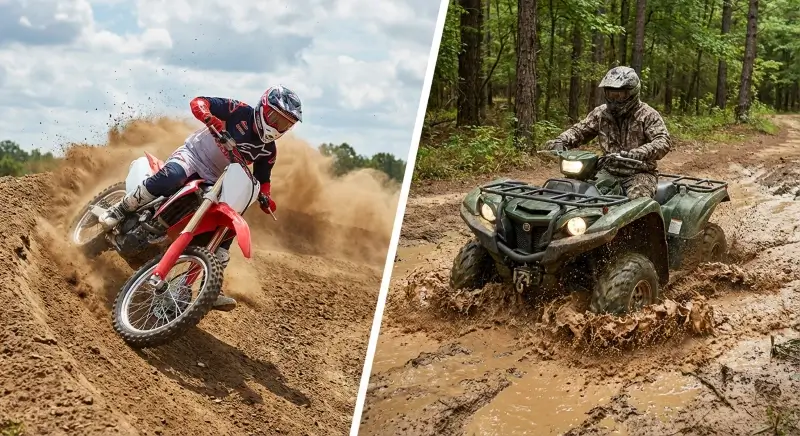
Adrenaline vs. Adventure
“Fun” is subjective. In the off-road world, we split fun into two categories: Type 1 and Type 2.
The Dirt Bike Experience (The Pilot)
Riding a dirt bike is Type 2 fun. It is miserable while you are learning, exhausting while you are doing it, and absolutely euphoric when you finish.
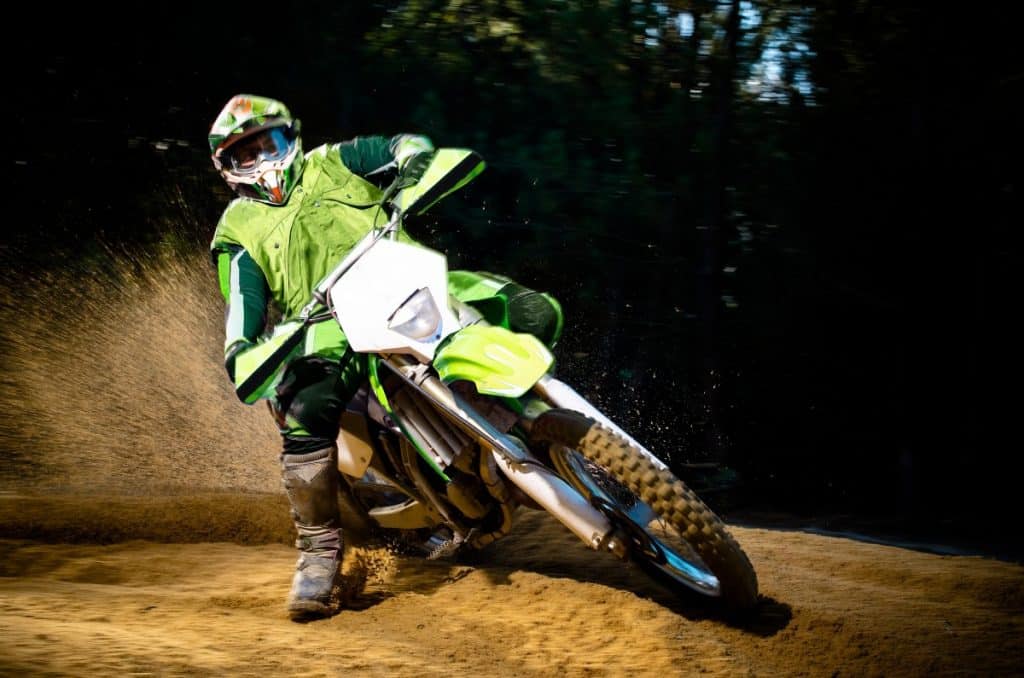
The magic comes from the gyroscopic effect. When you are on a bike, you are not just sitting on a machine; you are part of the physics equation. You don’t turn the handlebars to turn; you use counter-steering and body English to lean the bike over. There is a specific feeling—floating over a section of whoops or railing a rutted corner—that four wheels simply cannot replicate.
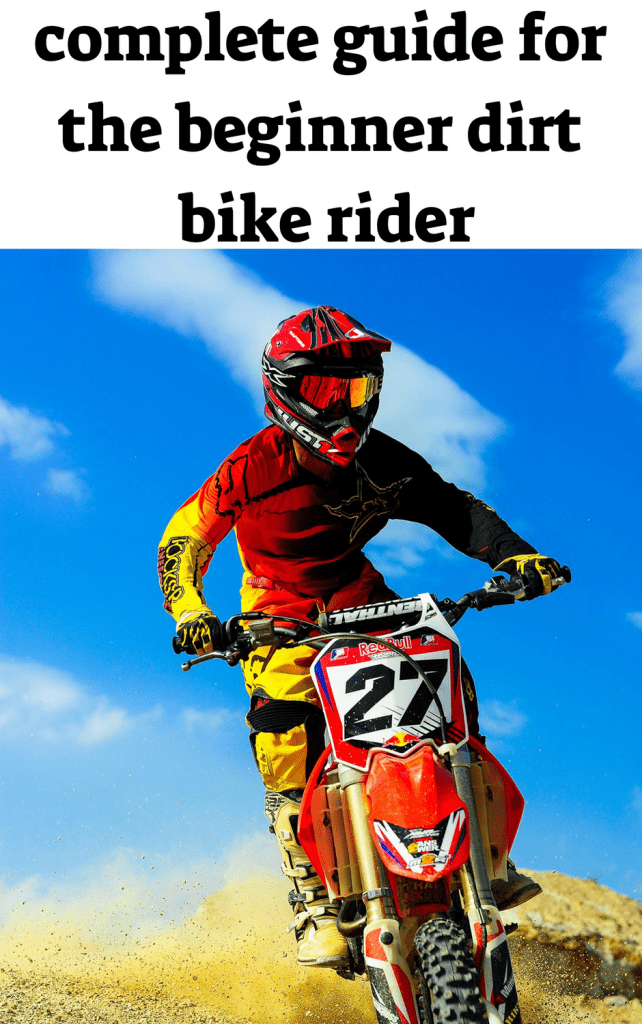
But it demands everything from you. You are constantly standing in the “attack position,” gripping the tank with your knees, and managing the clutch, front brake, rear brake, and shifter simultaneously. It is a full-body cardio workout.
I remember my first time taking a dirt bike into the tight woods of Southern Ohio. I stalled that bike fifty times. My legs were shaking so bad I couldn’t kickstart it anymore. But when I finally linked three turns together without braking? I felt like a superhero.
The ATV Experience (The Tank)
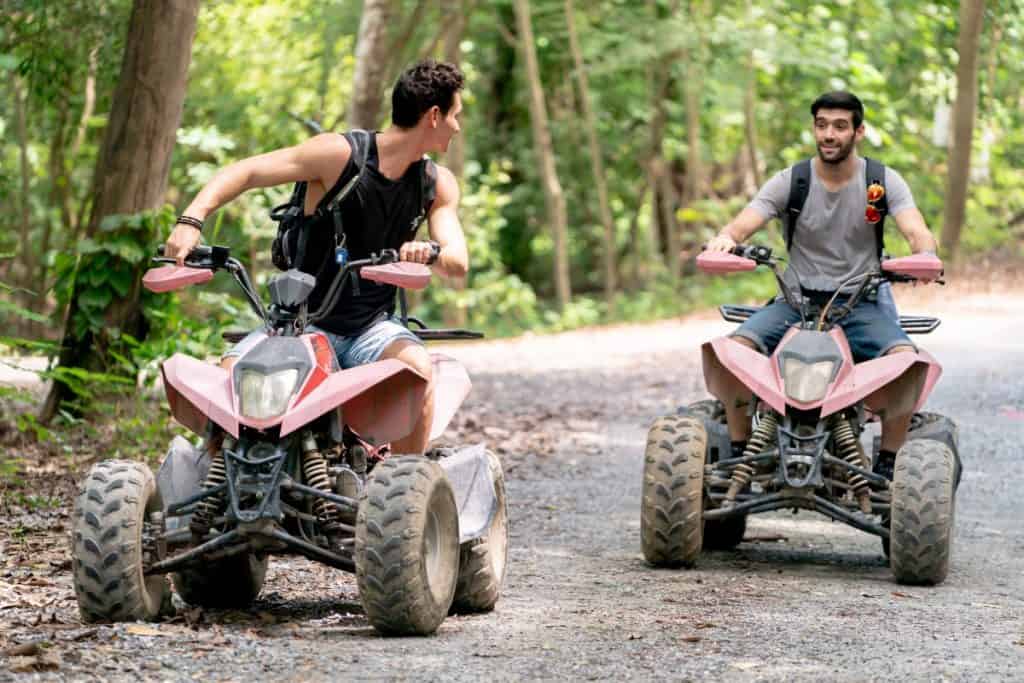
ATV riding is Type 1 fun. It is fun the moment you push the throttle. You don’t need to balance. You can stop in the middle of a creek to look at a deer without falling over.
The fun here comes from raw power and domination. On a big-bore utility quad like a Can-Am Outlander or Polaris Sportsman, you are driving a tank. You point it at a mud hole, mash the thumb throttle, and let the 4WD system eat. You can slide the rear end around corners, drift on gravel fire roads, and carry a cooler with lunch for the whole family.
However, the connection to the trail is different. You feel the trail through the handlebars, fighting the feedback, rather than flowing with it. The unsprung weight on a quad is massive—heavy tires and axles bouncing up and down—which means you get jostled around more than a bike rider who can float over the bumps.
Where Can You Actually Ride?
This is the number one thing buyers overlook. It doesn’t matter how fun the machine is if you can’t get it past the gate.
The “50-Inch Rule”
In many National Forests, trails are gated with steel posts set exactly 50 inches apart.
- Dirt Bikes: Fit through everything. Single-track trails (12-24 inches wide) are exclusive to motorcycles. These are often the most technical, scenic, and uncrowded trails in the country.
- ATVs: Modern 4×4 quads are getting huge. A stock sports quad might be 46 inches wide, but a big utility quad with aftermarket wheels can easily push 50 or 52 inches. If you are too wide, you are locked out of the best trails. You are stuck on “two-track” fire roads with the Jeeps and Side-by-Sides.
Robert’s Terrain Test: Florida Sand vs. Ohio Woods
When I lived in Florida, the sugar sand was a nightmare on a dirt bike. The front tire wants to knife in and tuck. You have to ride fast—lean back and pin it—just to stay on top of the sand. It’s terrifying for beginners. In that terrain, a sport quad like a Yamaha Raptor 700 is king. It floats on top of the sand and carves dunes effortlessly.
In the tight woods of Ohio or Pennsylvania, the script flips.
- Woods Riding: On a quad, a narrow trail means you are constantly banging your wheels against roots and trees. If the trail gets too tight, you have to do a 12-point Austin Powers turn to get out.
- The Bike Advantage: On a bike, you have a single line. You can weave between trees that are 30 inches apart. You can pivot turn. The world feels bigger on a bike because you fit in more places.
The Learning Curve and The Safety Paradox
There is a dangerous misconception that because ATVs have four wheels, they are safer. The data—and the graveyard of broken bones—suggests otherwise.
Two Wheels: The Steep Climb
Learning to ride a dirt bike is hard. You will fall. A lot.
You have to master the “friction zone” of the clutch lever while balancing at 2 MPH. Beginners often struggle with whiskey throttle—where they panic, grip tighter, and accidentally twist the throttle wide open, launching the bike.
- The Crash Reality: When you crash a dirt bike, you usually slide out. The bike (230-250 lbs) falls away from you. You get scraped up, maybe break a collarbone or wrist, but you usually walk away.
Four Wheels: The False Sense of Security
Any idiot can get on a quad and go fast in a straight line. That is the problem.
Because you don’t need balance, beginners ride way above their skill level immediately. They hit a corner too fast, turn the bars, and physics takes over.
- The Rollover Risk: ATVs have a high center of gravity and a narrow wheelbase. If you corner hard and the tires catch a root, the machine doesn’t slide—it trips.
- The Crash Reality: When a quad rolls, it often rolls on top of the rider. We are talking about 600 to 800 lbs of steel and hot engine crushing you. This is why safety courses emphasize shifting your body weight to the inside of the turn (hanging off the seat), but few casual riders do it correctly.
Transport and Wrenching
You are tired. It’s Sunday night. You just want to go home. This is where the decision hits you hard.
Getting to the Trail
- The Dirt Bike: You can throw it in the bed of almost any pickup truck. You can use a $150 hitch carrier on the back of a Subaru. You can push it up a ramp by yourself.
- The ATV: You likely need a trailer. If you put it in a truck bed, you can’t close the tailgate (unless you have a long bed).
- The Loading Nightmare: Trying to load a muddy, slippery 700lb ATV into a lifted truck bed on steep ramps is one of the most dangerous parts of the day. If the tires spin on the wet metal ramp, the quad can shoot sideways and land on you. I have seen it happen.
Wrenching Cost
Dirt bikes are cheaper to maintain, period.
- Tires: Two tires vs. four. A full set of decent ATV tires can cost $600+. A set of bike tires is $200.
- Cleaning: Washing a dirt bike takes 20 minutes. Washing a utility quad takes hours. Mud packs into every crevice of the A-arms, around the CV boots, and deep in the radiator. You will be finding dried clay in that skid plate three years from now.
Which Machine Fits You?
Here is the breakdown based on pure utility and adrenaline metrics.
| Feature | Dirt Bike | ATV (Sport/Utility) |
| Learning Curve | Steep (Weeks to months) | Shallow (Minutes) |
| Physical Exertion | High (Full body cardio) | Medium (Upper body/Grip) |
| Transport | Easy (Hitch carrier/Truck bed) | Hard (Trailer required) |
| Maintenance Cost | Low (Less oil, fewer tires) | High (Differentials, axles, CVs) |
| Mud Capability | Poor (Sinks easily) | Excellent (4WD floats) |
| Sand Capability | Difficult (Requires speed) | Excellent (Stable platform) |
| Safety Risk | High frequency, lower severity | Low frequency, high severity |
Who Should Buy What?
I’ve owned both. I currently have both in the garage. Here is how I steer people when they ask me at the track.
Get a Dirt Bike If:
- You want a sport, not just a hobby. You want to improve your fitness and coordination.
- You mostly ride alone. Single-track trails are solitary and peaceful.
- You are on a budget. A used Honda CRF230F holds its value and costs pennies to run.
Get an ATV If:
- You ride with family. Being able to ride “2-up” (on specific models) or haul a kid’s gear on the racks is a game changer.
- You want to hunt, plow snow, or work on property during the week.
- You have bad knees or hips that can’t take the standing up/sitting down repetition of a bike.
FAQ
Is an ATV safer than a dirt bike for a teenager?
Statistically, no. While a dirt bike looks scarier because it tips over, teens on ATVs are prone to rollovers because they lack the body mass to counter-balance the machine in turns. If you buy your teen a quad, ensure it has a throttle limiter and teach them active body positioning immediately.
Can I ride a dirt bike in the snow?
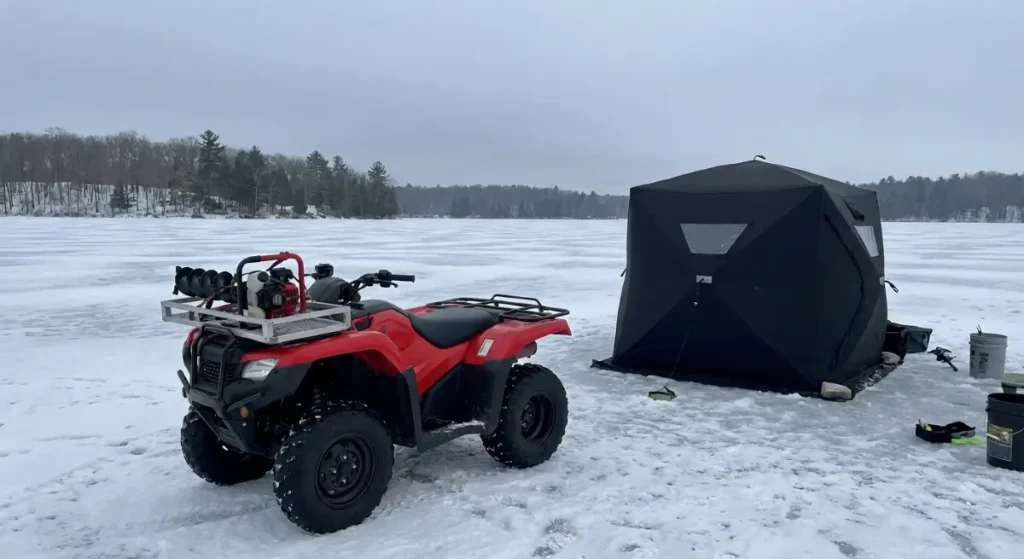
You can, but it’s tricky. You need studded tires to get any traction on ice. An ATV with 4WD is far superior in the snow and can actually be used to plow the driveway, making it a functional winter tool rather than a garage ornament.
Which holds its value better?
Generally, brand-name utility ATVs (Honda Rancher, Yamaha Grizzly) hold their value incredibly well because hunters and farmers always want them. Dirt bikes fluctuate more based on the season and the condition of the engine.
What is the “attack position” on a dirt bike?
This is the fundamental stance: standing on the pegs, knees bent, elbows up and out, head over the handlebars. This disconnects your body from the bike’s impacts. On an ATV, you sit far more often, which transfers those impacts directly to your spine.
Do I need a license to ride these on public land?
In most states, you do not need a driver’s license, but you need an OHV (Off-Highway Vehicle) sticker or permit. However, if you want to connect trails by riding on country roads, a “Dual Sport” dirt bike (street legal) gives you a massive advantage over an ATV, which is illegal on pavement in most jurisdictions.