Honda Rancher vs. Rubicon (Differences & Buyer’s Guide 2026)
The Honda FourTrax Rancher and the FourTrax Foreman Rubicon appear almost identical. They share signature aggressive front grilles, legendary Honda longitudinal engine architecture, and a reputation for near-indestructible mechanical durability. But then you look at the price tags, a fully outfitted Rubicon commands a $2,500 to $3,500 premium over a base Rancher.
⚡ Quick Answer: Honda Rancher vs. Rubicon
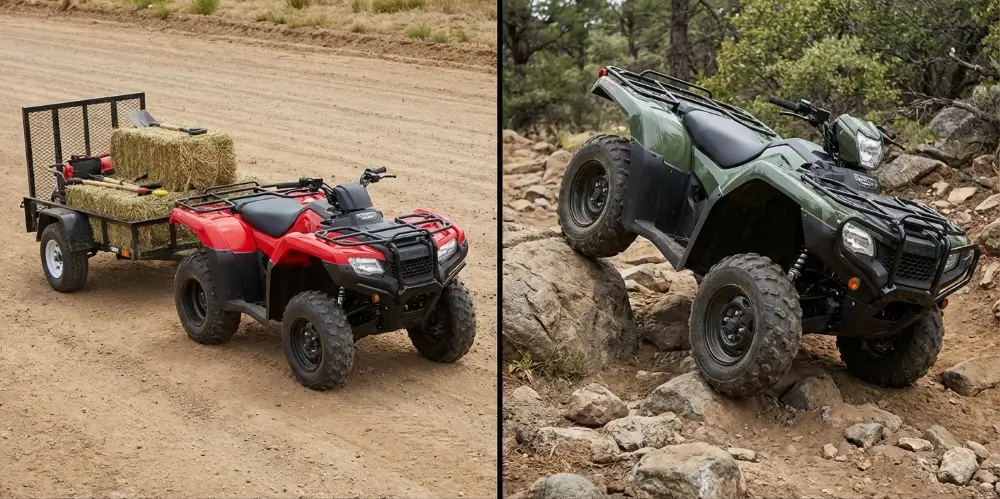
If your quad will spend 80% of its life doing flat-ground homestead chores, spraying pastures, or towing heavy utility trailers on a budget, buy the Honda Rancher 420. Its Solid Rear Axle (SRA) refuses to squat under tongue weight, and its compact chassis is agile and affordable. However, if you plan to conquer rocky mountain trails, plow deep winter snow, or ride technical mud ruts, buy the Honda Rubicon 520. The Rubicon’s plush Independent Rear Suspension (IRS), mechanical front Differential Lock, and true Low-Range sub-transmission make it vastly superior off-road and far easier on your spine.
Engine and Powertrain Differences
While dealership specification sheets display 420cc versus 518cc, the true difference between these two machines is not top speed—it is how they deliver torque and gear reduction under heavy working loads.
Displacement and Usable Torque (420cc vs. 518cc)
The Honda Rancher utilizes a 420cc liquid-cooled, fuel-injected single-cylinder OHV engine producing roughly 26.6 horsepower. The Rubicon steps up to a 518cc liquid-cooled powerplant producing approximately 28.7 horsepower. In a flat-out drag race down a gravel road, both machines top out at nearly identical speeds (between 48 and 52 mph).
However, the Rubicon delivers over 18% more low-RPM pulling torque, which is immediately noticeable when crawling through axle-deep mud, turning heavy aftermarket tires, or pushing snow piles.
The Low-Range Sub-Transmission
Standard Rancher models do not have a Low-Range transfer case. On a Rancher, first gear serves as both your low-speed crawling gear and your general yard-work gear. If you mount heavy 27-inch mud tires or try to push heavy, wet snow up a steep grade, first gear can feel too tall, forcing you to slip the clutch.
The Rubicon, on the other hand, features a true dual-range sub-transmission offering selectable High (H) and Low (L) ranges. In Low Range, the gear reduction multiplies engine torque dramatically. You can crawl over boulders at 2 mph with absolute throttle precision without straining the transmission. For severe tasks like heavy snow plowing or skidding logs out of the woods, the Rubicon’s Low Range is a total game changer.
Shift Technology
Honda offers three distinct shifting methods across these platforms, each tailored to different rider preferences.
Manual Foot-Shift (FM)
Traditional left-foot toe shifter with an automatic centrifugal clutch. Simple, bulletproof, and practically impossible to break. Preferred by remote farmers who want zero computerized solenoids.
Electric Shift Program (ESP – TE)
Push-button shifting via handlebar up/down arrows. An electric motor inside the side case operates the shift drum. Ideal for riders with ankle injuries or those wearing bulky winter muck boots.
Dual Clutch Transmission (DCT – FA)
Honda’s revolutionary automotive-grade twin-clutch automatic. One clutch controls odd gears (1, 3, 5) while the second controls even gears (2, 4). Gear changes happen in milliseconds without power interruption. You can toggle between fully automatic drive mode or manual paddle-shift override at will.

Suspension and Ride Dynamics
Chassis dynamics define how your body feels after spending five hours in the saddle. The chassis architectures between these two machines represent completely different design philosophies.
Solid Rear Axle (SRA) on the Rancher
The standard Rancher utilizes a traditional swingarm with a rigid, solid steel rear axle tube connecting both rear wheels. When the left wheel hits a bump, the entire axle pivots and tilts. On rough, rocky trails, this creates noticeable side-to-side chassis kick that tires out your lower back. However, when you attach a 40-gallon liquid herbicide sprayer to the rear rack or hook up a 1,000-pound utility trailer, the solid axle shines: it does not squat. Hitch height remains perfectly level, and tire camber never tilts inward, ensuring maximum tire contact and steering stability on flat ground.
Independent Rear Suspension (IRS) on the Rubicon
The Rubicon comes standard with dual-A-arm Independent Rear Suspension (IRS). Each wheel moves vertically on its own dedicated shock absorber. Over rocks, tree roots, and off-camber ruts, the chassis stays remarkably flat, soaking up trail chatter before it reaches your spine. More importantly, IRS unlocks massive ground clearance: the Rubicon delivers 9.4 to 9.7 inches of ground clearance, compared to just 7.2 inches on the base solid-axle Rancher. In deep ruts where a Rancher will drag its rear differential pumpkin on the dirt, a Rubicon walks right through.
Note: Honda does produce a hybrid trim known as the Rancher 4×4 Automatic DCT IRS EPS. This model incorporates the Rubicon’s independent rear suspension onto the 420 chassis, but it still lacks the Rubicon’s 518cc engine displacement, Low-Range sub-transmission, and front differential lock.
Traction Systems
Both models feature Honda’s push-button TraxLok system allowing riders to switch on-the-fly between 2WD and 4WD. However, the front differential capabilities diverge dramatically when real traction is tested:
Rancher Limited-Slip Differential
The standard Rancher utilizes a torque-sensing front differential. If one front wheel lifts into the air or rests on slick grease while the other has grip, the system attempts to bias torque, but slippage still occurs. Experienced riders often must tap the front brake lever to “trick” the differential into biting. In serious mud holes, you effectively have 3-wheel drive.
Rubicon True Mechanical Differential Lock
The Rubicon features a handlebar-mounted Diff Lock switch. When engaged, a mechanical sliding collar locks both front axles rigidly together. Regardless of whether one wheel is dangling in mid-air or buried in slick clay, both front wheels rotate at identical speed with 100% torque delivery. This is your ultimate insurance policy against getting stuck.
Honda Rancher vs. Rubicon
Here is how the core specifications compare across the factory model lines.
| Feature | Honda Rancher 420 (Base 4×4) | Honda Rubicon 520 (DCT / Deluxe) | The Shop Mechanic Verdict |
|---|---|---|---|
| Engine Displacement | 420cc Liquid Single (OHV) | 518cc Liquid Single (OHV) | Rubicon has ~18% more low-end pulling torque. |
| Transmission Options | 5-Speed Manual, ESP, or DCT | 5-Speed Foot-Shift or Automatic DCT | Both feature Honda’s durable gear-driven design. |
| Sub-Transmission | None (Single Range) | Dual-Range (High / Low) | Low Range is essential for plowing and heavy towing. |
| Rear Suspension | Swingarm Solid Rear Axle (SRA) | Independent Rear Suspension (IRS) | SRA tows without squat; IRS rides like a sofa. |
| Ground Clearance | 7.2 inches | 9.4 to 9.7 inches | Rubicon clears tall stumps and deep mud ruts easily. |
| Front Differential | TraxLok Torque-Sensing Ltd Slip | TraxLok with Full Diff Lock | Diff Lock provides genuine 4-wheel drive clawing power. |
| Towing Capacity | 848 lbs | 1,322 lbs | Rubicon features beefier frame bracing and disc brakes. |
| Front & Rear Racks | 66 lbs front / 133 lbs rear | 99 lbs front / 187 lbs rear | Rubicon handles 40% heavier rack cargo payloads. |
| Base MSRP Estimate | $6,000 – $8,200 (Trim dep.) | $9,400 – $11,000 (Trim dep.) | Rubicon commands a ~$2,500 premium for IRS and locker. |
Where Does the Standard Honda Foreman 520 Fit?
Many buyers find themselves confused by the naming conventions: Rancher, Foreman, and Foreman Rubicon. Think of the standard Foreman 520 as the missing mechanical link between the Rancher and Rubicon. The standard Foreman takes the Rubicon’s larger 518cc engine and front differential lock, but mounts them into a Solid Rear Axle (SRA) chassis without IRS. If you want the big engine and locking differential for heavy towing or snow removal, but prefer the non-squatting work stability and lower cost of a solid axle, the standard Foreman 520 is your sweet spot.
Ergonomics, Power Steering, and Rack Capacities
Beyond mechanical differences, daily ownership comfort varies significantly.
- Saddle Foam Density: The Rancher seat is firmer and narrower, designed for active utility work where the rider frequently stands up or slides off to open gates. The Rubicon seat uses thicker, plusher contour foam designed for all-day trail comfort.
- Electric Power Steering (EPS): While EPS is an optional upgrade on the Rancher, it comes standard on virtually all Rubicon models. Honda’s torque-sensing EPS acts as an active steering damper: when your front tire deflects off a hidden boulder or submerged log, the EPS motor absorbs the violent shock, preventing the handlebars from ripping out of your grip.
- Heavy-Duty Steel Racks: The Rubicon features upgraded heavy-gauge steel rack tubing rated for 99 pounds on the front and 187 pounds on the rear (compared to 66/133 lbs on the Rancher). Both utilize traditional open steel round tubing, making them far easier to secure bungee cords and ratchet straps to than competitors’ smooth plastic decks.
Which Honda Four-Wheeler Should You Buy?
After servicing and testing both platforms across thousands of trail miles, here is our definitive buying advice based on your real-world usage.
The Homestead and Flat Property Owner
If you own 5 to 40 acres of relatively flat pasture, need to pull an aerator, tow a firewood cart, or check perimeter fence lines, buy the Honda Rancher 420 (Foot Shift or EPS). You do not need independent suspension to spray weeds, and you do not need a front locker to drag a fallen branch. The solid rear axle will handle heavy tongue weight better, and you keep $2,500 to $3,000 in your pocket.
The All-Day Mountain Trail Rider
If you love riding public trail networks (like Hatfield-McCoy, Brimstone, or state OHV parks) with rocky climbs, washed-out ruts, and all-day saddle sessions, buy the Honda Rubicon 520 DCT EPS. The independent rear suspension will save your back and hips from chronic fatigue, and the automatic DCT allows you to enjoy the scenery without constantly working a foot shifter. When you hit a rocky staircase, the Diff Lock crawls right up where a Rancher will spin tires.
The Snow Plower and Mud Enthusiast
If you plan to install a heavy 54-inch or 60-inch snow plow blade, or fit aggressive 27-inch mud tires, the Rubicon is non-negotiable. The Low-Range sub-transmission allows you to push wet, packed snowbanks without overheating your internal ATV wet clutch assembly, while the true front differential lock delivers maximum traction on sheer ice.
Essential Gear and Maintenance Upgrades for Honda Utility Quads
FTC Disclosure: When you purchase through our links, we may earn an affiliate commission at no extra cost to you. We only recommend genuine, field-tested gear proven in our garage.
Pro Honda GN4 10W-40 4-Stroke Motor Oil (1 Gallon)
Honda’s longitudinal engines and Dual Clutch Transmissions (DCT) use precision hydraulic shift solenoids and internal wet clutches that are extremely sensitive to oil shear and friction modifiers. Pro Honda GN4 is the factory OEM fluid formulated to prevent clutch slip and ensure crisp shifting.
- OEM factory formula for Rancher & Rubicon engines
- Certified JASO MA wet clutch and DCT transmission safe
- Superior shear stability protects transmission gears
WARN VRX 25 Powersports Electric Winch (2,500 lb)
Whether pulling a Rancher out of a deep swamp rut or raising and lowering a snow plow blade on a Rubicon, this 2,500-pound winch is the industry standard. Features an all-metal three-stage planetary gear train, mechanical load brake, and full IP68 waterproof sealing.
- IP68 waterproof construction handles mud and creek crossings
- Handlebar-mounted rocker control switch included
- 50 feet of high-strength steel wire rope
Kemimoto 73L Weather-Resistant ATV Rear Rack Bag
Take full advantage of Honda’s steel tubular rear cargo racks. This 73-liter heavy-duty 1680D Oxford fabric cargo bag features an integrated insulated cooler compartment, water-resistant zippers, and multiple quick-release mounting straps that secure tightly to Rancher and Rubicon racks.
- Massive 73L storage capacity with insulated cooler section
- Heavy-duty 1680D water-repellent fabric resists mud and rain
- Universal strap mount fits Honda tubular steel racks perfectly
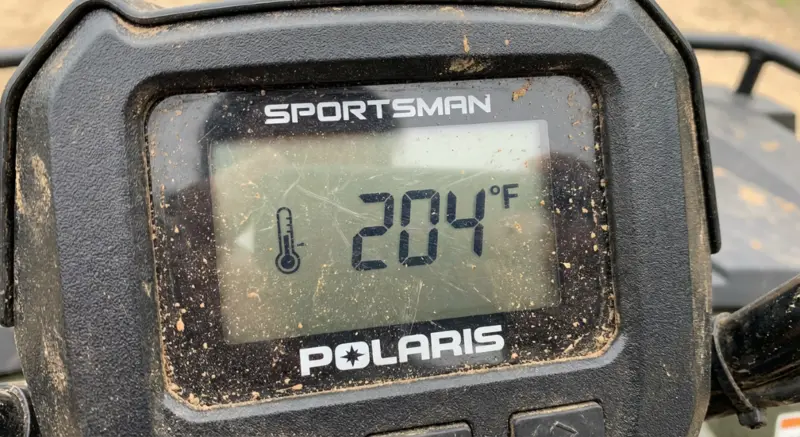
To ensure your Honda’s engine operates within safe thermal limits while hauling or climbing in summer heat, consult our guide on normal ATV operating temperatures and cooling fan cycles.
Frequently Asked Questions
Can I install a lift kit on a Honda Rancher to match Rubicon ground clearance?
You can install a lift kit on a Rancher, but it introduces driveline strain. Because the Rancher uses a Solid Rear Axle (SRA), lifting increases the operational angle on the universal joint and driveshaft, leading to premature U-joint wear and chassis vibration. The Rubicon’s Independent Rear Suspension (IRS) with dual CV axles handles suspension lifts with far better geometry and reliability.
Is the Honda Rubicon 520 much faster than the Rancher 420?
No. Both machines have a top speed between 48 and 52 mph. The Rubicon’s 518cc engine is tuned for low-end torque rather than top-end speed. The primary advantage of the Rubicon’s engine is its pulling power under heavy loads and its ability to turn larger aftermarket tires without bogging down.
Why does my Honda Rancher or Rubicon DCT shift clunky at low speeds?
Honda’s Dual Clutch Transmission (DCT) is a fully mechanical, gear-driven transmission shifted by electric computer-controlled actuators, not a rubber-belt CVT. At low crawl speeds, you will hear and feel a mechanical click-clunk as gears engage. This is completely normal and is the mechanical hallmark of Honda’s beltless durability.
Can I add a front Differential Lock to a Rancher later?
Aftermarket mechanical lockers (like Torq-Masters) exist, but they require extensive front differential disassembly and void factory warranties. By the time you purchase a Rancher, buy a locker kit, pay for installation, and add a lift kit, you will have spent more money than the price difference of a factory-equipped Rubicon. If you need a locker, buy the Rubicon from the start.