What Temp Should My Four Wheeler Run At? (Normal Range & Overheating Chart)
Most riders never think about their engine operating temperature until steam hisses out of the coolant overflow bottle. In modern high-compression single-cylinder and V-twin engines, running beyond thermal tolerance doesn’t just cause a boil-over—it warps aluminum cylinder heads, scores cylinder walls, and cooks valve stem seals in minutes.
⚡ Quick Answer: Normal ATV Operating Temperatures
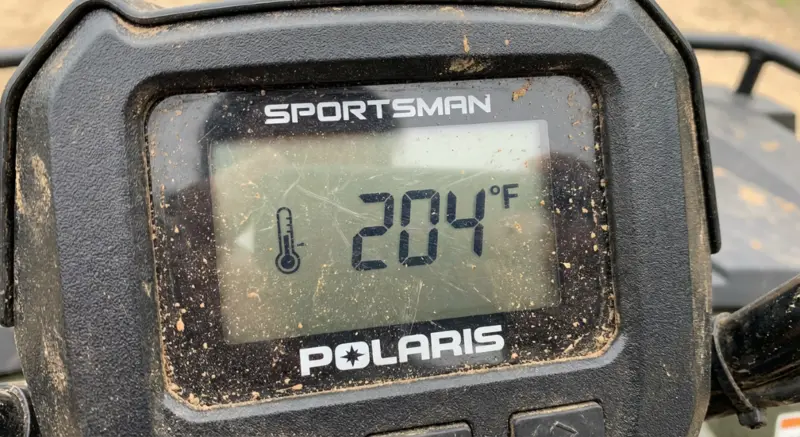
- Modern Liquid-Cooled ATVs: Normal running temperature is 180°F to 205°F (82°C – 96°C). The electric radiator fan typically activates between 205°F and 212°F (96°C – 100°C) and shuts off once the coolant drops back to ~190°F–195°F.
- The Danger Zone: Any sustained reading above 225°F (107°C) requires immediate attention. At 235°F–244°F (113°C–118°C), the engine control unit (ECU) triggers limp mode, pulling timing and fuel to protect against total seizure.
- Air-Cooled & Oil-Cooled Models: Air-cooled cylinder heads naturally operate between 300°F and 380°F (149°C – 193°C) at the spark plug base. However, crankcase oil temperature must remain under 250°F (121°C) to prevent thermal breakdown of the lubricating film.
Liquid-Cooled vs. Air-Cooled Operating Ranges
An ATV’s cooling design determines how heat transfers away from internal components. Understanding your specific platform prevents premature panic when the engine is simply doing its job.
Liquid-Cooled Systems (Polaris, Can-Am, Yamaha, Modern Honda)
Liquid-cooled engines maintain tight thermal regulation through an aluminum radiator, water pump impeller, thermostat, and pressurized expansion system.
Here is how that cycle works across temperature milestones.
- 175°F – 185°F (79°C – 85°C) — Thermostat Opens: Coolant begins circulating from the engine water jackets through the radiator core. At cruising trail speeds (15–30 mph), fresh ram-air keeps temperatures stable in this zone.
- 205°F – 212°F (96°C – 100°C) — Fan Cycle Threshold: During low-speed rock crawling, plowing snow, or prolonged idling, airflow drops. The engine temperature sensor signals the ECU or thermo-switch to cycle on the cooling fan.
- 215°F – 225°F (102°C – 107°C) — Heat Soak Warning: The fan is running at full capacity, but heat is accumulating faster than the radiator can dissipate it. Check for mud build-up immediately.
- 230°F+ (110°C+) — Critical Danger Zone: The high-temp warning light illuminates. Coolant pressure approaches the blow-off rating of standard 1.1 bar radiator caps.
Brand-Specific Factory Temperature Triggers
Different manufacturers program their cooling fans and warning thresholds differently based on engine architecture.
| Brand / Platform | Normal Trail Range | Fan ON Trigger | Fan OFF Trigger | Warning / Limp Mode |
| Polaris Sportsman (570 / 850 / 1000) | 185°F – 205°F | 208°F (98°C) | 194°F (90°C) | 233°F (Flashing Temp / Limp) |
| Can-Am Outlander / Renegade (Rotax V-Twin) | 180°F – 208°F | 208°F (98°C) | 200°F (93°C) | 244°F (Limp Mode / “LIMP HOME”) |
| Yamaha Grizzly / Kodiak 700 | 180°F – 205°F | 214°F (101°C) | 203°F (95°C) | 239°F (High Temp Light) |
| Honda FourTrax Foreman / Rubicon (Liquid) | 185°F – 203°F | 205°F (96°C) | 195°F (91°C) | 230°F (Red Oil/Coolant LED) |
| Kawasaki Brute Force 750 (V-Twin) | 185°F – 208°F | 208°F (98°C) | 198°F (92°C) | 232°F (Check Engine / Overheat) |
Air-Cooled & Oil-Cooled Engines (Honda Recon, TRX250X, Youth Quads)
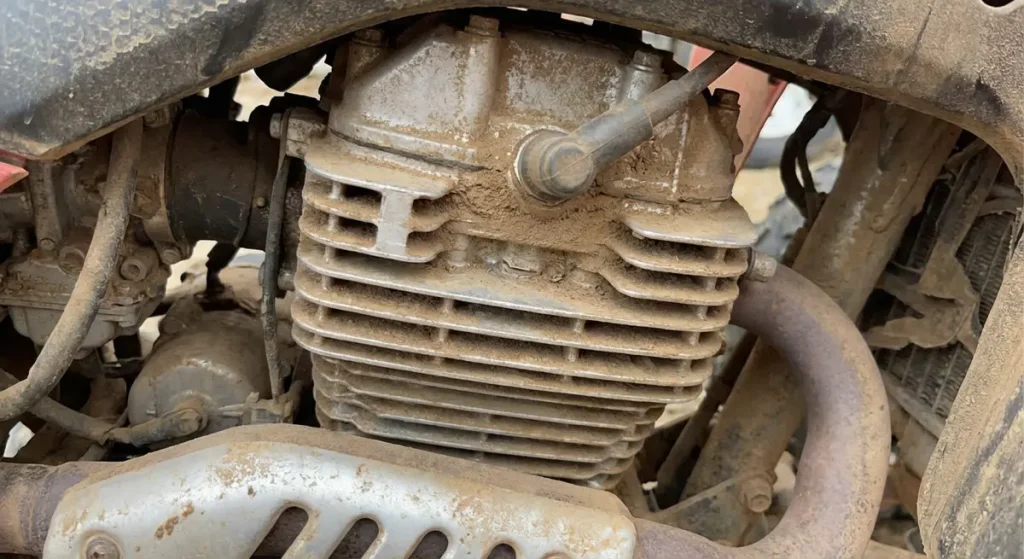
Older workhorses and smaller displacement youth machines (50cc–250cc) don’t carry radiators or water pumps. They dissipate heat via cast aluminum fins extending from the cylinder barrel and head, relying entirely on forward vehicle momentum to force ambient air across the metal.
Cylinder Head Temperature (CHT)
300°F to 380°F measured at the spark plug base is standard under hard load. If CHT exceeds 420°F, piston crown detonation and ring sticking become imminent risks.
Oil Sump Temperature
Because motor oil handles both lubrication and internal cooling on air-cooled engines, sump oil runs hotter—typically 210°F to 240°F. If your sump oil surpasses 260°F, conventional petroleum oils begin to shear out of viscosity grade, drastically accelerating valvetrain and clutch wear.
How to Accurately Check Temperature Without a Digital Gauge
Many utility ATVs omit a real-time digital degree readout, providing only an idiot light that triggers after excessive heat has already saturated the cylinder. Here are three practical ways to diagnose temperature before disaster strikes:
Use an Infrared Pyrometer (Temp Gun) on Key Castings
Point an infrared laser thermometer directly at the thermostat housing (on liquid-cooled engines) or the cylinder head base next to the spark plug (on air-cooled engines). Never measure directly on the exhaust header pipe, which regularly operates above 600°F–900°F regardless of engine condition.
The Sweet Scent of Ethylene Glycol
A microscopic coolant leak or pressure release through the radiator cap overflow tube produces a sweet, pancake syrup aroma long before visible steam emerges. If you smell this while riding, pull off the throttle immediately.
Mechanical Ticking & Lean Pinging
When engine oil overheats, its kinematic viscosity plummets. Hydraulic lifters, cam chains, and rocker arms lose cushioning, generating a distinct high-frequency metallic “clicking” or “ticking” from the top end.
What to Do When Overheating (3-Minute Trailside Diagnosis Flowchart)
If your dashboard temperature light flashes or your gauge displays 225°F+, do not panic and do not immediately turn off the ignition if your fan is functional.
⚠️ Step 1: Evaluate the Fan Before Killing the Key
- If the fan is screaming and you have coolant: Shift into neutral and let the machine idle for 45 to 60 seconds. The water pump continues spinning, circulating hot coolant through the fan-blown radiator core to shed peak combustion heat. Shutting down abruptly traps stagnant coolant against cherry-red cylinder walls, causing severe “heat-soak boil-over.”
- If the fan is DEAD silent or coolant is spraying violently: Shut the engine off immediately. Let it cool naturally.
Step 2: Inspect for the “Cement Radiator” (Mud Blanket)
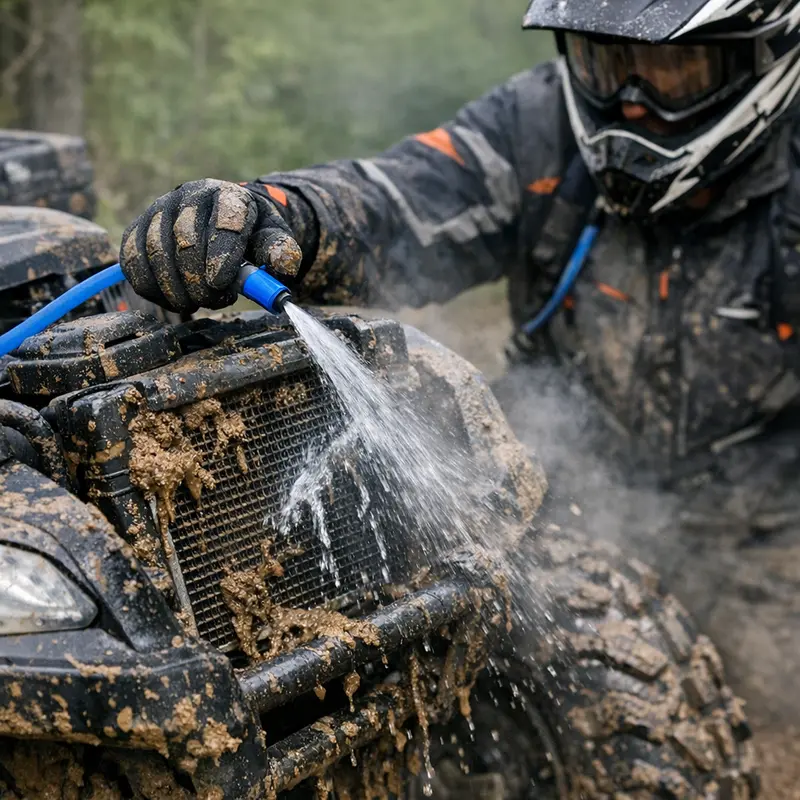
The number-one cause of ATV overheating on trails in Ohio, Pennsylvania, or Kentucky is dried clay caked into the radiator fins. A 1/8-inch coating of dried silt insulates the aluminum like concrete, eliminating heat exchange even if the fan runs continuously.
Trailside Cleanout: Use clean water from your hydration bladder or a spray bottle to flush the radiator fins from the back side pushing forward toward the bumper. Do not use high-pressure trail washers point-blank, which bend delicate aluminum cooling fins and permanently choke airflow.
Step 3: Test for Radiator Cap Failure vs. Blown Head Gasket
If your overflow reservoir is puking boiling coolant while your digital dash displays a modest 205°F, your cooling system is losing pressure. At atmospheric pressure (0 psi), pure water boils at 212°F (100°C). A standard 1.1 bar (16 psi) radiator cap elevates the boiling point to ~250°F (121°C).
If the cap’s rubber gasket degrades or the spring weakens, coolant escapes into the recovery bottle prematurely at 212°F without the engine actually being in danger. Replacing a worn radiator cap is a five-minute, $15 repair.
Field-Tested Tools & Upgrades to Prevent Overheating
FTC Disclosure: When you purchase through links on our site, we may earn an affiliate commission at no extra cost to you. We only recommend specialized gear that directly solves thermal issues.
1. Non-Contact Infrared Thermometer
The Mechanic’s Trail Tool: Stop guessing by touching plastic fenders. An accurate pyrometer like the Etekcity Lasergrip 1080 fits inside your front cargo box and lets you instantly read thermostat housing and cylinder base temps to pinpoint whether a sensor or the engine itself is failing.
2. High-Boiling Propylene Coolant
Thermal Buffer Upgrade: Standard automotive ethylene-glycol anti-freeze contains abrasive silicates that chew through tiny ATV water pump mechanical seals. Upgrading to Engine Ice Hi-Performance Coolant provides silicate-free, phosphate-free protection with a 256°F boil-over rating, shaving 10°F–15°F off peak operating temps.
3. High-Pressure Cap with Gauge
Instant Mechanical Feedback: If your ATV only has an idiot light on the dash, install a Tusk 1.6 / 1.8 Bar High Pressure Radiator Cap with Integrated Temperature Gauge. It raises the boiling point to ~260°F+ while providing an analog temperature dial on the radiator top.
FAQ
Can I use standard automotive antifreeze in an ATV?
Only if it is labeled 100% silicate-free and safe for aluminum engines. Most automotive coolants contain silicate particles designed to scrub cast-iron automobile blocks. In an ATV, these silicates act like sandpaper against the delicate ceramic water pump seals, resulting in weep hole leaks and rapid coolant loss.
Why won’t my ATV radiator fan kick on when the engine gets hot?
The three most frequent culprits are: 1) A blown fan fuse or tripped circuit breaker (check your fuse block or under-seat harness first), 2) A failed engine coolant temperature (ECT) sensor or thermo-switch that fails to signal the fan, or 3) Trail debris like sticks or dried clay physically jamming the fan blades, causing the motor to draw excess amperage and blow the fuse. Test the fan motor directly by bridging 12V from the battery to the fan harness plug.
Can I pour cold creek water over a hot ATV engine to cool it down?
No. Pouring cold stream water directly onto a 230°F+ engine block or cylinder head creates severe thermal shock. Because aluminum contracts rapidly upon sudden chilling, the cylinder head or engine case can crack, and head gaskets will warp instantly. You can gently spray water through the radiator fins to clear mud, but keep cold liquids off the engine castings until they cool down naturally.
What temperature causes a CVT belt to melt on a utility ATV?
Continuous CVT clutch housing air exhaust should remain below 180°F to 200°F. If belt case exhaust hits 220°F (104°C), the neoprene and kevlar bonding cords begin to soften, resulting in slippage. Above 250°F (121°C), the belt is susceptible to hour-glassing or disintegrating into shredded cord under heavy throttle.