What Is the Difference Between Honda Rubicon and Foreman?
Quick Summary: Honda Rubicon vs. Honda Foreman
Both ATVs share the same indestructible 518cc fuel-injected engine and TraxLok front diff-lock, but their chassis and transmissions serve completely different missions:
- Rear Suspension: The Foreman uses a heavy-duty Solid Rear Axle (SRA) that will not squat under tongue weight or heavy trailer loads. The Rubicon uses plush Independent Rear Suspension (IRS) with 9.7 inches of ground clearance (over 2 inches higher than the Foreman) for superior rock and rut trail comfort.
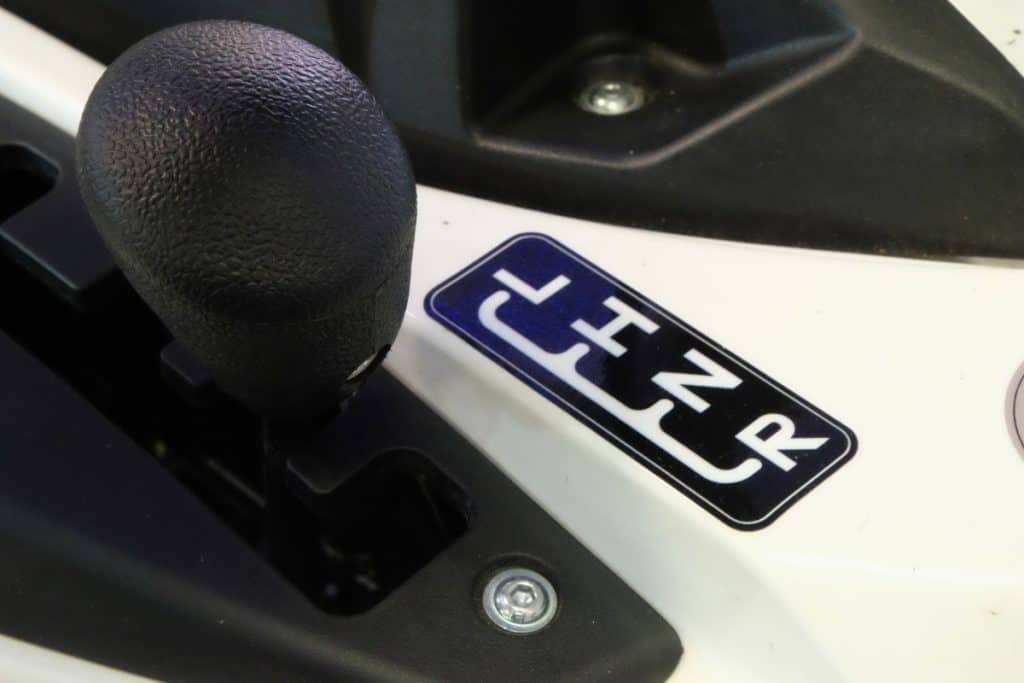
- Transmission Options: The Foreman is available strictly with a 5-speed manual foot-shift or push-button ESP (Electric Shift Program). The Rubicon offers foot-shift or an automotive-grade Dual Clutch Transmission (DCT) with a true dual-range High/Low sub-transmission.
- Brakes: The Foreman uses dual front hydraulic discs and a sealed mechanical rear drum. The Rubicon features 4-wheel outboard hydraulic disc brakes for superior wet-weather stopping power.
- Price & Mission: The Foreman ($7,999–$8,799) is an unyielding farm, ranch, and snow-plow workhorse. The Rubicon ($9,399–$10,599) is a premium backcountry trail explorer with all-day riding comfort.
SRA Workhorse vs IRS Trail Luxury
To understand the price gap and the split in the Honda community, you have to look beneath the plastics. The Foreman and Rubicon represent two fundamentally different engineering philosophies designed for two distinct types of ATV owners.
The Honda Foreman 520 is an uncompromising commercial workhorse built around a traditional Solid Rear Axle (SRA). It is engineered for farmers, ranchers, timber contractors, and snow-plow operators who prioritize zero-squat towing stability, mechanical simplicity, and indestructible durability under punishing utility loads.
The Honda Foreman Rubicon 520 is Honda’s flagship recreational utility ATV. Built around fully Independent Rear Suspension (IRS), four-wheel disc brakes, and an optional Dual Clutch Transmission (DCT) with low-range transfer gears, the Rubicon is engineered for long days exploring rocky mountain trails, deep mud bogs, and backcountry hunting expeditions where all-day rider comfort and ground clearance are paramount.
If you are also considering Honda’s lighter 420cc platform, check out our in-depth comparison of the differences between the Honda Rubicon and Rancher, which breaks down frame geometry and engine displacement trade-offs.
Solid Axle vs Independent Rear
The single most defining physical difference between these two ATVs is the rear suspension architecture. This mechanical distinction completely dictates how each quad handles obstacles, bumps, and heavy cargo.
Why the Solid Rear Axle Dominates Heavy Utility Work
The Foreman utilizes a rigid steel swingarm housing a solid drive axle and dual shock absorbers. Both rear wheels are locked to a single axle tube, with the rear differential pumpkin positioned directly in the center.
This solid axle design offers an enormous mechanical advantage for heavy work: zero tongue-weight squat. When you drop a heavy trailer onto the hitch or mount a 25-gallon liquid weed sprayer on the rear rack, the distance between the rear axle and the chassis does not change tire camber. The tires remain perpendicular to the ground, maintaining maximum traction without bowing outward. Furthermore, when cornering under load, the quad exhibits virtually zero body roll, giving the operator incredible confidence on side-hills.
The drawback of a solid axle is ground clearance and ride quality. Because the differential pumpkin hangs between the rear wheels, the Foreman offers 7.5 inches of ground clearance. When trail riding, whatever rock or tree stump passes under your front bumper can potentially strike the rear differential. Additionally, when one rear wheel hits a boulder, that kinetic impact is transferred directly across the axle to the other side, jarring the rider’s lower back.
How Independent Rear Suspension Transforms Trail Comfort
The Rubicon features Independent Rear Suspension (IRS) utilizing dual high-strength A-arms and coil-over shocks with 5-position spring preload adjustability on each side. The rear differential is tucked up tightly inside the central frame, sending power outward through dual CV axle shafts.
The result is a massive leap in trail performance: 9.7 inches of ground clearance—over 2.2 inches higher than the Foreman. On rutted logging roads and boulder-strewn creek crossings, the Rubicon walks over obstacles that would high-center a Foreman. More importantly, when one rear tire hits a root, only that wheel articulates upward. The chassis remains level, insulating the rider from fatigue over a 50-mile trail day.
The trade-off of IRS occurs under heavy towing: placing significant tongue weight onto the hitch compresses the rear independent springs, causing the rear wheels to squat and ride with negative camber, slightly reducing clearance while loaded.
Manual Foot-Shift, ESP, and Dual-Clutch DCT
Behind the 518cc engine sits another major divergence in drivetrain technology. Depending on the model code you select, your shifting experience will be radically different.
The Foreman Powertrain
The Honda Foreman is built for purists who distrust complex electronic actuators. It is available in two shifting formats.
Manual Foot-Shift (FM1 / FM2)
A classic 5-speed manual foot pedal with an internal centrifugal wet clutch. There is no handlebar clutch lever; you simply step on the shifter, and internal change clutches disengage the gear automatically. It provides 100% direct mechanical gear engagement with zero electronics to fail in sub-zero blizzards or flooded muskeg.
Electric Shift Program (FE2)
Replaces the foot lever with handlebar-mounted UP and DOWN push buttons, powered by a 12V reversible electric shift motor.
The Foreman uses a single-range transmission. However, Honda geared first gear with an ultra-low ratio that serves as a dedicated “granny gear,” providing immense pulling power from a dead stop without needing a separate transfer case.
The Rubicon Powertrain
The Rubicon offers the best of both worlds.
Manual Foot-Shift (FM6)
For trail riders who want the plush ride and high clearance of IRS but still prefer the indestructible simplicity of a manual foot shifter, Honda builds the Rubicon FM6. It is widely considered the holy grail of reliability for backcountry trail explorers.
Automatic Dual Clutch Transmission (FA6 / FA7)
Honda’s automotive-grade DCT utilizes two independent hydraulic clutch packs operating on parallel shafts. One clutch controls odd gears (1, 3, 5), while the other controls even gears (2, 4). The computer pre-selects the next gear before releasing the current clutch, delivering seamless, instantaneous shifts without the rubber-band lag of a belt-driven CVT.
Dual-Range Sub-Transmission (High / Low)
Unlike the Foreman, the Rubicon DCT features a true sub-transmission transfer lever. You have 5 gears in Low range and 5 gears in High range, giving you 10 forward drive ratios. Dropping the Rubicon into Low range provides incredible engine braking down steep technical descents and maximum torque for crawling over rock ledges.
To learn how to properly maintain, adjust, or troubleshoot these gearboxes, read our technical tutorial on how to repair Honda ATV transmissions and adjust clutch free play.
Sealed Drum vs Four-Wheel Hydraulic Discs
Braking represents another substantial upgrade on the Rubicon. While both models feature dual 190mm hydraulic disc brakes with twin-piston calipers up front, their rear braking systems are completely different.
The Foreman uses a single, sealed mechanical drum brake mounted inside the solid rear axle housing. While Honda’s multi-lip seals are the best in the industry, aggressive mud riders and water crossers know that silt and grit will eventually penetrate drum seals. Over time, mud turns the drum shoes into paste, causing brake fade and requiring periodic teardown and cleaning.
The Rubicon features a modern four-wheel hydraulic disc braking system. In addition to the dual front discs, it incorporates dual 170mm hydraulic discs mounted outboard inside each rear wheel. The hydraulic discs shed mud, water, and heat instantly, delivering dramatically sharper stopping power when descending steep mountain grades with heavy cargo.
Towing Capacity and Tongue Weight Realities
If you look at the factory specification sheets, you will notice an interesting paradox: the Honda Rubicon is officially rated to tow 1,322 pounds, while the Honda Foreman is officially rated at 848 pounds.
On paper, this makes it look like the Rubicon is the stronger work vehicle. In the real world, the opposite is often true. The Rubicon’s higher tow rating comes from its superior four-wheel hydraulic disc brakes, which allow it to safely stop a rolling 1,300-lb trailer. However, the Rubicon’s IRS suspension means that heavy tongue weight will cause the rear end to squat deeply, taking weight off the front steering tires.
The Foreman’s solid rear axle carries tongue loads with absolute zero squat. For dragging logs across rough pastures, moving heavy utility trailers around a job site, or plowing heavy commercial driveways, the Foreman’s chassis provides a firmer, more stable working platform.
If you are outfitting a four-wheeler specifically for winter utility work, check out our guide to the best ATVs for snow plowing, where we rank the Foreman 520 as the number-one manual work platform on the market.
Foreman vs Rubicon
Here is how the mechanical specifications, physical dimensions, and factory pricing compare across both platforms.
| Feature | Honda FourTrax Foreman 520 | Honda FourTrax Foreman Rubicon 520 |
|---|---|---|
| Engine Displacement | 518cc Liquid-Cooled OHV Single (Longitudinal) | 518cc Liquid-Cooled OHV Single (Longitudinal) |
| Rear Suspension Architecture | Solid Rear Axle (SRA) with steel swingarm & dual shocks (7.3 in travel) | Independent Rear Suspension (IRS) with dual A-arms & preload shocks (8.5 in travel) |
| Ground Clearance | 7.5 inches (diff pumpkin sits low between wheels) | 9.7 inches (+2.2 inches higher obstacle clearance) |
| Transmission Options | 5-Speed Foot-Shift (Manual) or 5-Speed ESP (Push-Button); Single Range | 5-Speed Foot-Shift (FM6) or Dual Clutch Transmission (DCT) with Auto & Manual Modes |
| Sub-Transmission (Transfer Case) | None (Single direct drive range with ultra-low 1st gear) | High / Low Range Sub-Trans on DCT models (10 total forward drive ratios) |
| Braking System | Dual front 190mm hydraulic discs; 160mm sealed mechanical rear drum | Four-wheel hydraulic discs (dual 190mm front; dual 170mm outboard rear) |
| Towing & Rack Ratings | 848 lbs tow rating; Front 88 lbs / Rear 176 lbs (zero squat with tongue loads) | 1,322 lbs tow rating; Front 99 lbs / Rear 187 lbs (suspension squats under tongue load) |
| Curb Weight | 637 to 655 lbs (substantially lighter) | 701 to 734 lbs (+65 to 80 lbs heavier due to IRS & DCT) |
| Starting Base MSRP | $7,999 – $8,799 ($1,400 to $2,000 less expensive) | $9,399 – $10,599 (Premium flagship pricing) |
Decoding Honda Model Codes
Honda dealerships use alphanumeric model codes that can be confusing for buyers. Here is what each letter represents.
- F: FourTrax (Honda’s utility ATV family designation).
- M: Manual Foot-Shift Transmission.
- E: Electric Shift Program (ESP push-button shifting).
- A: Automatic Dual Clutch Transmission (DCT).
- Number (1, 2, 6, 7): Package level (1 = Manual steering; 2 = Electric Power Steering; 6 = IRS with EPS; 7 = Deluxe package with aluminum wheels).
| Model Trim Code | Chassis Family | Transmission & Steering | Ideal Owner Application |
|---|---|---|---|
| Foreman TRX520FM1 | Foreman (SRA) | 5-Speed Manual Foot-Shift / Manual Steering | Budget ranch workhorse; zero electronics to fail in deep mud or sub-zero freezes. |
| Foreman TRX520FM2 | Foreman (SRA) | 5-Speed Manual Foot-Shift / Electric Power Steering (EPS) | The #1 snow plowing machine. Heavy plow weight on front tires handled effortlessly by EPS. |
| Foreman TRX520FE2 | Foreman (SRA) | 5-Speed Electric Shift Program (ESP) / Electric Power Steering (EPS) | Work utility with push-button convenience for riders who prefer not using a manual foot lever. |
| Rubicon TRX520FM6 | Rubicon (IRS) | 5-Speed Manual Foot-Shift / Electric Power Steering (EPS) | The Purist Trail Quad. High-clearance IRS comfort combined with a bulletproof manual foot-shift. |
| Rubicon TRX520FA6 | Rubicon (IRS) | Dual Clutch Transmission (DCT) / Sub-Trans (Hi/Lo) / EPS | The all-around flagship. Automatic convenience, high clearance, and low-range crawl for backcountry trips. |
| Rubicon TRX520FA7 | Rubicon Deluxe (IRS) | DCT Automatic / Hi-Lo Sub-Trans / EPS / Cast Aluminum Wheels | The luxury package. Deluxe painted bodywork, lightweight cast wheels, and maximum trail capability. |
Which Honda ATV Should You Buy
Having serviced and ridden hundreds of Honda utility ATVs over the years, the decision between a Foreman and a Rubicon comes down to an honest assessment of your terrain and workload.
Buy the Honda Foreman 520 if: You are buying a machine primarily for work. If your quad will spend its life on a farm, ranch, timber tract, or behind a heavy snow plow blade, the Foreman’s Solid Rear Axle, lighter curb weight, mechanical simplicity, and lower price tag make it the most economical, bulletproof working tool on earth. The Foreman FM2 (Foot-Shift with EPS) is the undisputed sweet spot of utility value.
Buy the Honda Rubicon 520 if: You are buying a machine primarily for trail riding, hunting, and outdoor exploration. If you ride rocky trails, steep mountainous terrain, or deep mud ruts, the Rubicon’s 9.7 inches of ground clearance, plush Independent Rear Suspension, and 4-wheel disc brakes will save your back from exhaustion. If you want manual reliability, buy the Rubicon FM6; if you want automatic trail luxury with low-range crawl, buy the Rubicon FA6 DCT.
Essential Accessories for Honda Foreman and Rubicon
Disclosure: The Dirt Rider’s Way is reader-supported. When you purchase through links on our site, we may earn an affiliate commission at no extra cost to you.
WARN VRX 25 2500lb Powersports Winch
The gold standard in ATV winches with IP68 waterproof sealing, aircraft-grade steel rope, and a load-holding mechanical brake essential for trail recovery and snow plow lifting.
Kolpin SwitchBlade Universal ATV Plow
Heavy-gauge stamped steel blade with width adjustment from 48 to 60 inches. Bolts perfectly to Honda Foreman and Rubicon lower frames for commercial-grade driveway clearing.
Pro Honda GN4 10W-40 4-Stroke Oil
Factory OEM lubricant formulated without friction modifiers to protect the 518cc engine’s wet clutch and gear-driven transmission from premature glazing and thermal breakdown.
Frequently Asked Questions
Is the Honda Rubicon bigger than the Honda Foreman?
Both machines share the same frame width and the exact same 518cc engine. However, the Rubicon stands noticeably taller because its Independent Rear Suspension (IRS) provides 9.7 inches of ground clearance, compared to 7.5 inches on the solid-axle Foreman. The Rubicon also weighs approximately 65 to 80 pounds more due to its dual rear A-arms, rear disc brakes, and DCT transmission.
Why is the Honda Rubicon more expensive than the Foreman?
The Rubicon commands a $1,400 to $2,000 price premium because it includes more advanced engineering components: fully independent rear suspension, four-wheel hydraulic disc brakes, an automotive-grade Dual Clutch Transmission (DCT), and a dual-range High/Low transfer case. The Foreman relies on simpler, lower-cost components like a solid rear axle and a mechanical rear drum brake.
Which is better for snow plowing: the Foreman or the Rubicon?
The Honda Foreman (specifically the FM2 with Electric Power Steering and a manual foot shift) is widely considered the superior snow plowing platform. Its Solid Rear Axle prevents the quad from squatting under heavy rear ballast, and its direct mechanical gear drive delivers 100% mechanical lockup with zero belt slippage or electronic shift delays when pushing heavy wet snow.
Can you get a Honda Foreman with an automatic transmission?
No. The Honda Foreman 520 is only available with a 5-speed manual foot-shift (FM1/FM2) or an Electric Shift Program (FE2) that uses handlebar push buttons. If you want a fully automatic transmission that shifts gears on its own, you must step up to the Honda Rubicon DCT (FA6/FA7) or consider the smaller Rancher 420 DCT.