Are Kawasaki ATVs Reliable? (Brute Force Problems & Truth)
⚡ Quick Answer: Are Kawasaki ATVs Reliable?
Yes, Kawasaki ATVs are exceptionally reliable machines, renowned across the off-road industry for virtually bulletproof engine internals and massive low-end torque. The flagship Brute Force 750 is assembled in Lincoln, Nebraska, featuring an indestructible V-Twin engine, a sealed wet rear brake that never wears out in mud, and a heavy-duty differential. The smaller Brute Force 300 and 450 are manufactured in partnership with KYMCO in Taiwan, offering proven reliability at a lower price point. While Kawasaki quads run hotter than single-cylinder rivals and demand proactive radiator cleanouts and valve lash adjustments, they routinely log over 10,000 trail miles when properly maintained.
American Muscle vs. Taiwanese Partnership
The Brute Force 750 (Assembled in Lincoln, Nebraska)
The flagship Brute Force 750 4x4i EPS is assembled right in the American heartland at Kawasaki’s sprawling manufacturing facility in Lincoln, Nebraska. Powered by a 749cc liquid-cooled 90-degree V-Twin SOHC engine producing approximately 50 horsepower, this machine is 100% pure Kawasaki engineering. It is built heavy, loud, and over-engineered, designed specifically for North American trail riding, deep mud bogs, and heavy ranch work.
The Brute Force 300 and 450 (The Proven KYMCO Partnership)
The entry-level Brute Force 300 (detailed extensively in our best 300cc ATV guide) and the modern Brute Force 450 are manufactured in partnership with Taiwanese powersports giant KYMCO. Far from being cheap no-name clones, KYMCO is a world-class OEM manufacturer that produces scooter and small-displacement drivetrains for BMW, Arctic Cat, and Kawasaki. These single-cylinder utility quads are compact, lightweight, fuel-efficient, and easy on the wallet, making them phenomenal entry points for teenagers and budget-conscious homesteaders.
Engine Durability
The beating heart of Kawasaki’s off-road reputation is the 749cc 90-degree V-Twin. While competitors like the Yamaha Grizzly and Honda Rubicon rely on big single-cylinder “thumper” engines, Kawasaki committed to twin-cylinder architecture.
Instantaneous Low-RPM Throttle Response
Because two cylinders share the combustion load, rotating mass spins up faster, providing snappy throttle snap that lifts the front wheels over fallen logs effortlessly.
Forged Crankshaft and Connecting Rods
Kawasaki engineered the lower end of the 750 engine with industrial tolerances. Crankshaft bearings and oil passages are oversized, meaning catastrophic lower-end engine failures are virtually unheard of if clean oil is maintained.
Nikasil-Coated Aluminum Cylinders
Electrofusion cylinder plating sheds heat rapidly and resists piston scuffing far better than traditional cast-iron sleeves.

Known Quirks & Maintenance
No ATV is flawless. If you want a Kawasaki to last a decade, you must understand its three well-documented mechanical quirks.
The Infamous Belt Light Limp Mode and Trailside Reset Trick
Every seasoned Brute Force owner knows the dread of the flashing dashboard “Belt” light. Inside the CVT clutch cover sits a mechanical toggle switch called the Belt Deflection Sensor. If the drive belt stretches or slaps against the inside of the casing, it physically trips this switch, cutting engine power to 15 mph (limp mode) to prevent shredding the belt. While it protects the clutch, it is notoriously sensitive and can trip from sudden shock-loads or mud splashing.
Dealerships will charge $100 to plug into a diagnostic tool. In the real world, you can reset the computer trailside in under 60 seconds with this garage secret.
- Remove the seat and locate the small black and grey electrical connectors near the ECU.
- Disconnect both, cross them, and plug black into grey and grey into black.
- Turn the ignition key ON for 10 seconds. Watch the Belt light flash rapidly on the gauge cluster.
- Turn the ignition key OFF, unplug the connectors, and restore them to their normal color-matched orientation (black to black, grey to grey).
- Turn the key back ON. The limp mode is wiped, and full power is restored.
Manual Valve Lash Adjustments (Solid Lifters)
Unlike automotive engines with hydraulic lifters that self-adjust with oil pressure, the Brute Force 750 uses solid rocker arms with screw-and-locknut adjusters. Over thousands of miles, the intake and exhaust valves naturally settle into the cylinder head, tightening clearance. You should inspect valve lash after the initial 200-mile break-in and every 2,000 miles thereafter. Tight valves cause hard starting and lost compression, while loose valves produce an audible metallic ticking sound from the cylinder heads.
Radiator Mud Packing and Thermal Management
The Brute Force 750 produces significant engine heat because of its dual exhaust headers and high-compression V-Twin design. Factory radiators are mounted relatively low behind the front bumper. If you ride in thick clay or muddy water, the cooling fins clog quickly. Once air cannot flow through the radiator, the engine will climb above normal ATV operating temperatures (185°F to 210°F) and trigger thermal limp mode. Upgrading to a high-pressure radiator cap and washing the radiator fins from behind after every muddy ride is non-negotiable.
Unique Kawasaki Engineering Tech
Kawasaki engineers marched to their own beat when designing drivetrain components, creating features found on no other modern ATV.
The Sealed Oil-Bathed Multi-Disc Wet Rear Brake
Inspect the rear wheels of a Brute Force 750 and you will notice something missing: there are no brake rotors or calipers attached to the rear hubs. That is because the entire rear brake assembly is sealed internally inside the rear differential housing, submerged in circulating gear oil. While exposed disc brake pads on rivals wear down to bare metal in just two weekends of riding in abrasive sand and mud, Kawasaki’s carbon-fiber wet brake discs are 100% sealed against water, silt, and grit, routinely lasting the entire operational lifetime of the vehicle without needing pad replacements.
The Variable Front Differential Lock (The Yellow Lever)
While brands like Polaris use automatic on-demand systems and Yamaha uses a push-button servo, Kawasaki equips the Brute Force with a small yellow lever on the left handlebar. Pulling this lever pulls a mechanical cable that compresses the front differential clutch pack. The harder you squeeze the lever with your fingers, the tighter the differential locks. In technical rock crawling, this allows skilled riders to dynamically dial in exactly as much steering traction as needed, rather than fighting full, heavy locked steering.
Chassis Dynamics and the Active Body English Requirement
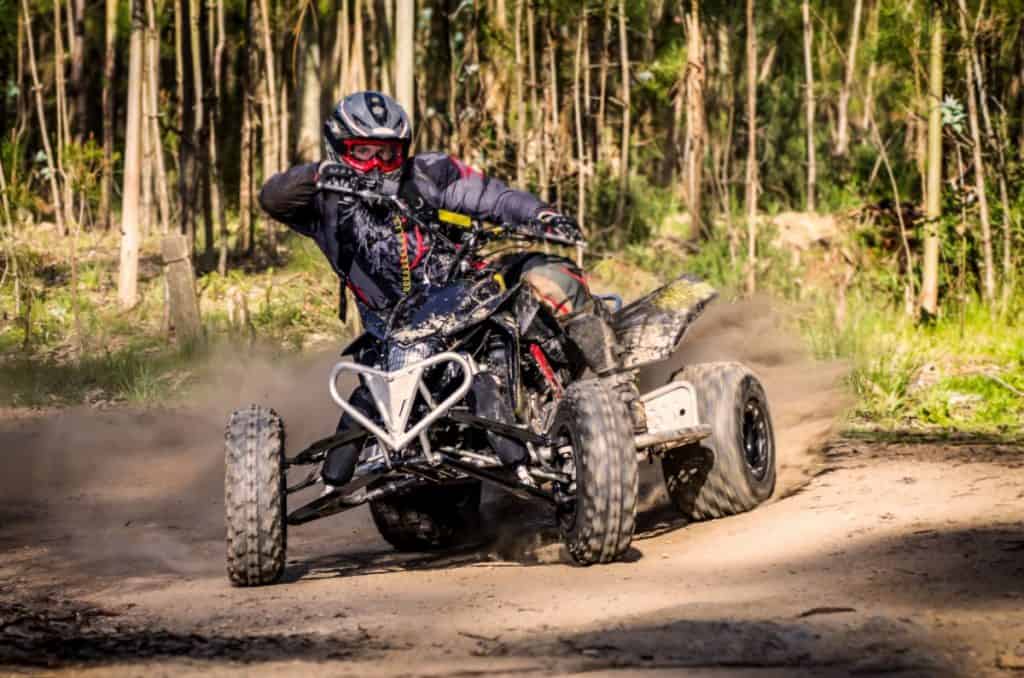
If you transition from a long-wheelbase Can-Am or a plush Polaris Sportsman to a Brute Force, the Kawasaki will initially feel tall and nimble. Because Kawasaki prioritized a compact wheelbase for threading between tight trees, it has a higher center of gravity. You cannot ride a Brute Force like a passive passenger. Fast cornering requires “active body English”—sliding your hips off the seat, shifting your body weight inward, and actively leaning into berms. Once mastered, it is one of the most athletic, rewarding machines to carve through tight woods.
Kawasaki Brute Force vs. The Big Three
Here is how the flagship Kawasaki Brute Force 750 stacks up against its primary Japanese and North American competitors:
| Model | Engine Architecture | Transmission Type | Rear Brake System | Front Differential | The Shop Verdict |
|---|---|---|---|---|---|
| Kawasaki Brute Force 750 | 749cc 90° V-Twin (50 hp) | KAPS Centrifugal CVT w/ Low | Sealed Wet Multi-Disc | Variable Manual Yellow Lever | Best raw torque, V-Twin roar, and mud-proof rear brakes. |
| Yamaha Grizzly 700 | 686cc Single SOHC (48 hp) | Ultramatic Constant-Tension CVT | Hydraulic Disc Brake | On-Command 3-Way Servo Lock | Smoothest CVT belt durability; more planted trail manners. |
| Honda Rubicon 520 | 518cc Single OHV (28.7 hp) | 5-Speed Automatic DCT / Geared | Inboard Hydraulic Disc | TraxLok Mechanical Locker | As detailed in our Rubicon vs. Rancher guide, zero belts to burn. |
| Polaris Sportsman 570 | 567cc ProStar Single (44 hp) | PVT Belt (CVT w/ Low) | Hydraulic Disc Brakes | On-Demand True AWD | Plush ride comfort, but lighter-duty suspension bushings. |
Essential Maintenance Gear for Kawasaki ATV Owners
FTC Disclosure: When you purchase through our links, we may earn an affiliate commission at no extra cost to you. We only recommend genuine, field-proven gear tested in our shop.
1.8 Bar High-Pressure Radiator Cap with Temp Gauge
The Brute Force 750 runs hot when trail mud clogs front radiator fins. Replacing the factory 1.1 bar cap with this 1.8 bar cap raises coolant boiling points well past 260°F to prevent boil-overs, while the integrated Celsius/Fahrenheit gauge lets you monitor temps instantly.
- 1.8 Bar high-pressure spring prevents coolant puking
- Built-in visual temperature gauge (0°F to 400°F)
- Universal fit for Japanese powersports radiators
Motul 7100 4T 10W-40 Synthetic Oil (4L)
Dual-cylinder V-Twin engines produce intense thermal loads. Formulated with 100% Ester synthetic base stocks and certified to JASO MA2 standards, Motul 7100 resists thermal breakdown and shear degradation in the hardest working Kawasaki engines.
- 100% Ester synthetic base resists thermal thinning
- Certified API SP & JASO MA2 wet-clutch compatible
- Maximum shear stability protects gear train meshing
Battery Tender Junior 12V 750mA Charger
Kawasaki’s electronic power steering (EPS), fuel pump, and radiator fan draw heavy electrical amperage. A weak battery dropping below 12.2V will trip false belt lights and EFI sensor codes. Keep your quad plugged into this smart float charger whenever parked.
- Fully automatic 4-step smart float charging program
- Prevents battery sulfation and false ECU error codes
- Quick-disconnect harness included for easy under-seat plug-in
Frequently Asked Questions
Do Kawasaki ATVs burn oil?
Well-maintained modern Kawasaki Brute Force engines do not burn oil. However, because the 750 is a high-performance V-Twin, it operates at higher operating temperatures than low-revving single-cylinder utility quads. If ridden in extreme summer heat or mud, lower-tier mineral oils will suffer thermal evaporation. Always use high-grade 10W-40 full synthetic JASO MA2 oil and check the dipstick before every long trail ride.
How fast is the Kawasaki Brute Force 750?
In showroom stock trim, the Kawasaki Brute Force 750 reaches a top speed between 68 and 72 mph on flat hardpack roads. More impressively, its low-end acceleration from 0 to 45 mph is among the most aggressive in the utility ATV class, out-pulling most single-cylinder rivals.
Why does my Kawasaki ATV make a loud whining noise?
The distinctive high-pitched whine on Kawasaki ATVs is completely normal. Known affectionately in off-road communities as the ‘Kawasaki Whine’, it is produced by straight-cut bevel gears inside the transmission case and high-velocity air rushing through the CVT clutch cooling duct.
Is the Kawasaki Brute Force 300 good for beginners and teens?
Yes. Built in partnership with KYMCO, the Brute Force 300 is an outstanding entry-level machine for beginners and teens aged 14 and older. It features an automatic transmission with reverse, front and rear steel cargo racks, a manageable 536-pound curb weight, and simple air/liquid-cooled maintenance that makes it far less intimidating than a 750 V-Twin.