Is ATV Oil Different Than Car Oil? (Don’t Kill Your Clutch)
You are standing in the aisle of the auto parts store. In one hand, you have a quart of “ATV Specific” oil that costs $18. In the other hand, you have a quart of standard 10W-40 automotive oil on sale for $5. They look the same. They feel the same. The viscosity numbers on the bottle are identical.
It is tempting to grab the cheap stuff and save forty bucks on an oil change. I get it. I’ve been there when the budget was tight and the trail was calling. But pouring that automotive oil into your quad is often the mechanical equivalent of feeding a steak dinner to a vegetarian. It might look like food, but the internal system is going to reject it violently.
Is ATV Oil Different Than Car Oil? The Short Answer: Yes, ATV oil is chemically different from standard car oil. Most ATVs use a “wet clutch” system where the engine oil also lubricates the transmission. Standard car oils contain “friction modifiers” to reduce drag, which will cause your ATV clutch plates to slip, glaze over, and eventually fail. You must use oil that meets the JASO MA standard.
The Wet Clutch Killer and Friction Modifiers
To understand why car oil kills quads, you have to understand what is happening inside the engine case.
In your truck, the engine oil lives in the engine. The transmission fluid lives in the transmission. They never meet. The clutch (if it’s a manual) is dry.
In most ATVs—especially Honda, Yamaha, and Suzuki utility quads—we have a shared sump. The oil you pour into the filler cap lubricates the piston, the camshaft, the transmission gears, and the clutch pack.
How a Wet Clutch Works
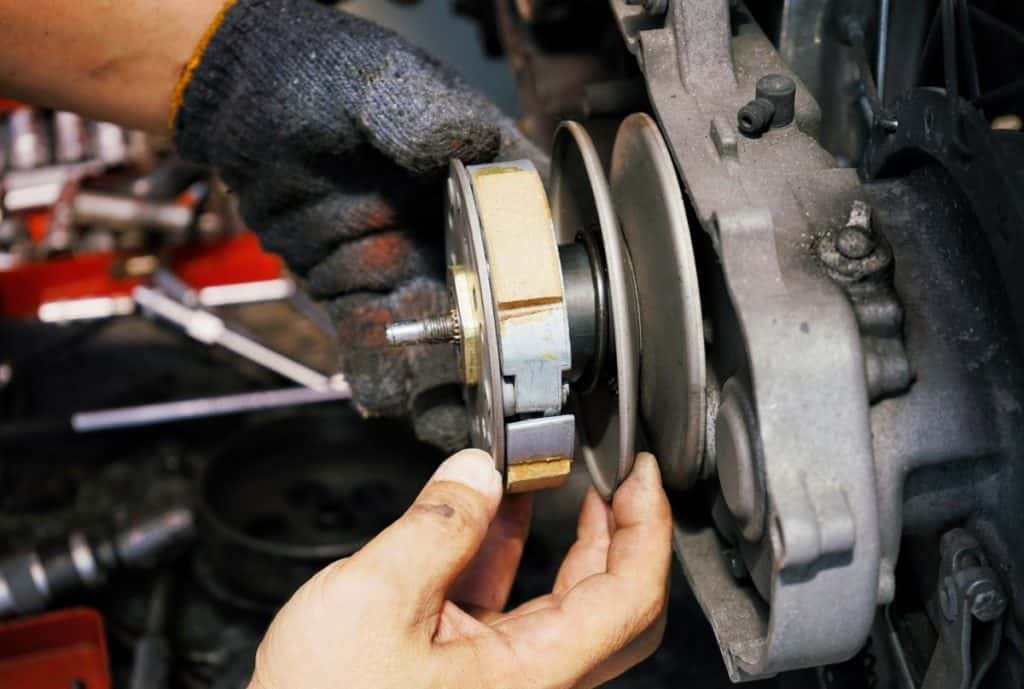
Your ATV clutch is a stack of fiber plates and steel plates pressed together by springs. To move the machine, these plates need friction to grab each other.
Automotive oil is designed with the opposite goal. Modern car engines are built for fuel economy. To achieve that, oil manufacturers add Molybdenum and PTFE (Teflon) to make the oil as slippery as possible. These are called friction modifiers.
When you put super-slippery car oil in a wet clutch, the oil does its job too well. It coats the fiber plates in a friction-reducing film.
- The Result: You hit the throttle. The engine revs to the moon. The noise is loud. But the bike barely moves. It feels like you are riding on ice, but you are on dry dirt. That is your clutch slipping. Once those plates glaze over with friction modifiers, they are ruined. You are looking at a $200 repair bill to save $15 on oil.
The Starburst Warning
You don’t need a chemistry degree to spot the bad stuff. You just need to look at the back of the bottle.
Look for the circular API (American Petroleum Institute) symbol.
- The Danger Zone: If the bottom half of the circle says “Resource Conserving” or “Energy Conserving,” put it back on the shelf. That phrase is code for “loaded with friction modifiers.”
- The Safe Zone: You are looking for the JASO MA or JASO MA2 stamp. This is a Japanese standard specifically for 4-stroke motorcycles with wet clutches. It guarantees the oil provides enough friction for the plates to bite.
The Blender Effect and Shear Stability
Friction isn’t the only problem. We also have to talk about violence.
ATV engines live a much harder life than the minivan engine the cheap oil was designed for.
Why ATVs Are Harder on Oil Than Cars
Think about the transmission gears in your quad. As they mesh together under heavy load, they act like a pair of scissors. They literally cut the long-chain oil molecules in half. This is called viscosity shear.
Automotive oil isn’t designed to run through a gearbox. It sits in the crankcase and lubricates bearings. When you run car oil through an ATV transmission, those gears chop the molecules up.
The Breakdown:
That 10W-40 oil you poured in? After two hours of hard riding, the shearing effect might thin it down to the consistency of 10W-20 water. Once the viscosity drops, your film strength disappears, and metal touches metal.
High RPMs and Air-Cooling
My truck cruises down the highway at 2,000 RPM. My Yamaha Raptor idles at 1,800 and screams at 9,000 RPM.
Higher RPM means more heat and more stress.
Plus, many ATVs are air-cooled or oil-cooled. They run significantly hotter than liquid-cooled car engines.
Florida Sand Reality:
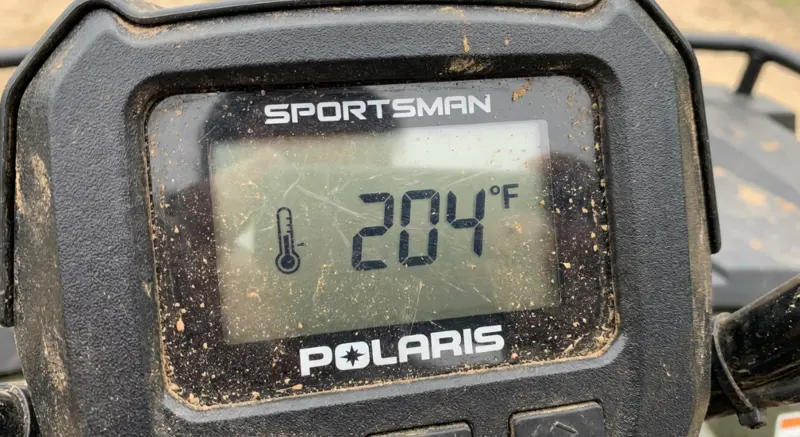
When I ride sugar sand in Ocala, the engine load is massive. The oil temperature spikes. Automotive oils are formulated for the stable, thermostat-controlled environment of a water-cooled car engine. They often suffer from thermal breakdown when pushed to the extreme heat of an air-cooled ATV engine buried in a mud hole.
Brand Specific Rules for Honda, Polaris, and Yamaha
Not all machines follow the same rules. The “Wet Clutch” rule applies to most, but there are exceptions.
The Shared Sump Crew (Honda, Yamaha, Suzuki)
If you own a Honda Rancher, Foreman, or a Yamaha Grizzly, you are in the “Shared Sump” club. You must be paranoid about your oil choice.
- Honda: Their engines are bulletproof, but their clutches are sensitive. I have seen a Honda Recon refuse to move after one oil change with Mobil 1 “High Mileage” car oil.
- The Requirement: You need high ZDDP (Zinc) and zero friction modifiers. Stick to JASO MA oils.
The Separate Sump Crew (Polaris, Can-Am)
Polaris does things differently. On a Sportsman or RZR, you have engine oil in the engine, and a separate fluid (AGL) in the transmission.
Does this mean you can run car oil in a Polaris?
- Technically, Yes: You won’t kill a wet clutch because the engine oil doesn’t touch the transmission.
- Practically, No: Polaris engines (especially the ProStar) use flat-tappet cams and run very hot. They recommend 5W-50 oil, which is a viscosity range you rarely find in automotive aisles. Standard car oil (5W-30) is too thin for the heat these engines generate. You still need a Powersports-grade oil with high Zinc levels to protect the cam lobes from wiping out.
Rotella T6 and Diesel Oils
I am going to save you some money now. I said you shouldn’t use car oil. I didn’t say you had to use ATV-branded oil.
The worst-kept secret in the off-road world is Shell Rotella T6 5W-40 Full Synthetic.
Why Diesel Oil Works
Rotella T6 is a heavy-duty diesel engine oil. Why do trail riders love it?
- JASO MA Certified: Look at the back of the jug. It actually carries the JASO MA / MA2 certification. It is safe for wet clutches.
- High Shear Stability: Diesel engines have high compression and massive torque. The oil is engineered to not break down under stress.
- High ZDDP: It is loaded with Zinc and Phosphorus, which protects the valvetrain of our engines.
- The Price: You can buy a gallon of Rotella T6 at Walmart for about $25. That’s $6.25 a quart. Compare that to
15−15−18 a quart for the manufacturer-branded oil.
I have run Rotella T6 in everything from my high-strung YFZ450R to my utilitarian Honda Rubicon for a decade. I have never had a clutch failure or an oil-related engine failure. It handles the Ohio winters (5W flow) and the Florida summers (40 weight protection) perfectly.
Note: There are other diesel oils like Chevron Delo that work, but always check the back for the JASO MA spec.
Automotive vs. Powersports vs. Diesel Oil
Here is the breakdown of what you are actually pouring into your machine.
| Feature | Standard Car Oil (API SN) | ATV Specific Oil (Yamalube/Honda GN4) | Heavy Duty Diesel (Rotella T6) |
| Friction Modifiers | High (Energy Conserving) | None / Low | None / Low |
| Wet Clutch Safe? | NO (Will slip) | YES (JASO MA) | YES (JASO MA) |
| Shear Stability | Low (Designed for bearings) | High (Designed for gears) | High (Designed for compression) |
| Zinc (ZDDP) | Low (~800 ppm) | High (~1200+ ppm) | High (~1200+ ppm) |
| Price Per Quart | ~$5 – $8 | ~$12 – $18 | ~$6 – $7 |
| Best Use | Your Toyota Camry | Your Warranty Period | High Performance / Budget |
Conclusion
Oil is the lifeblood of your machine. When you are twenty miles from the truck, that thin film of liquid is the only thing keeping your piston from welding itself to the cylinder wall.
Don’t be cheap in the wrong way. Saving money is great—that’s why I use Rotella T6—but trying to run “Energy Conserving” car oil in a wet-clutch ATV is a guaranteed way to destroy your clutch plates. Read the bottle. Look for the JASO MA box. If it’s not there, don’t pour it in.
FAQ
Can I switch from mineral oil to synthetic oil in an old ATV?
Yes, mostly. The myth that synthetic oil causes leaks is largely outdated. However, synthetic oil has higher detergency (cleaning power). If you have a 1998 Honda Foreman that has run mineral oil its whole life, switching to synthetic might clean out the gunk that was essentially acting as a seal around old gaskets, leading to a weep. For ancient machines, I stick to semi-synthetic or high-quality mineral oil.
I accidentally put car oil in my ATV. Is it ruined?
Not instantly. If you haven’t run it yet, drain it immediately and refill with the right stuff. If you have run it, drain it, change the filter, and refill. You might get lucky. If the clutch starts slipping, you will need to replace the fiber plates. No amount of flushing will “uncook” a glazed friction plate.
How often should I change my ATV oil?
Ignore the mileage. Go by hours or terrain.
Trail Riding: Every 20-25 hours.
Mud/Sand: Every 10-15 hours. The engine works twice as hard in mud.
The “Robert” Rule: If the oil looks like chocolate milk, you have water in it. Change it now.
Can I mix different brands of ATV oil?
In an emergency? Yes. Any oil is better than no oil. If you are low on the trail, mix it. But when you get home, drain the cocktail and fill it with a consistent brand and weight. Different additive packages can sometimes react or separate over time.
Why does Polaris recommend 5W-50 oil?
Because Polaris engines, specifically the ProStar series, run extremely hot and use a dry sump system. The 5W allows for instant flow at startup (critical for hydraulic chain tensioners), and the 50 weight provides a thick cushion when the engine is scorching hot. Do not run 10W-40 in a machine designed for 5W-50; you will starve the top end at startup.