The Best ATVs for Mudding (Buyer’s Guide)
Mud bogging is one of the most punishing and exhilarating disciplines in off-road powersports. Plunging an ATV into thigh-deep swamp water, thick clay ruts, and sucking peat bogs pushes mechanical components to their absolute thermal and structural limits. Standard trail quads entering these environments frequently suffer catastrophic failures: water ingestion into the airbox causing hydro-locked engines, mud-caked radiators triggering immediate overheating, and waterlogged CVT belts slipping under heavy rotational load.
To dominate peanut-butter mud holes without being winched out on every pass, you need a purpose-built mud machine. Whether you are shopping for a turn-key factory snorkeled monster with elevated radiators or seeking a bulletproof platform to build yourself, this guide breaks down the best ATVs for mudding.
We examine critical mechanical parameters including ground clearance, factory snorkel routing, differential lock systems, tire cleat depths, and recovery essentials.
BUYER GUIDE Quick Mudding ATV Category Breakdown
Ultimate Deep-Mud Dominator
Can-Am Outlander X MR 1000R
91 hp, 15.0 in clearance, factory rack-mounted radiator & 30 in Cryptids.
Heavy-Duty Mud Workhorse
Polaris Sportsman XP 1000 High Lifter
85 hp, dual snorkel stacks, geared-down mud transmission & 29.5 in Outlaw 2s.
Best Transmission Reliability
Yamaha Grizzly EPS / Honda Rubicon
Constant belt tension wet-clutch or dual-clutch direct gear drive.
Purpose-Built Mudding ATVs Technical Comparison
When comparing mud-specific ATVs, raw engine horsepower matters far less than functional clearance, differential lockup efficiency, and thermal management. The table below benchmarks the premier factory-prepared mud machines and top utility conversion platforms on the market today.
| Model | Engine & Output | Ground Clearance | Factory Snorkels | Front Diff Lock | Stock Tires | Radiator Position |
|---|---|---|---|---|---|---|
| Can-Am Outlander X MR 1000R | 976cc V-Twin (91 hp) | 15.0 in (381 mm) | Yes (Integrated Pod) | Visco-4Lok (Selectable 100% Lock) | 30" ITP Cryptid | Relocated to Front Rack |
| Polaris Sportsman XP 1000 High Lifter | 952cc ProStar Twin (85 hp) | 13.5 in (343 mm) | Yes (Dual Riser Stacks) | True On-Demand AWD | 29.5" High Lifter Outlaw 2 | Relocated to Front Rack |
| Yamaha Grizzly EPS | 686cc DOHC Single (48 hp) | 11.8 in (300 mm) | High-Mount Airbox (No Stacks) | On-Command Pushbutton Full Lock | 26" Maxxis Zilla | Stock Frame (Requires Kit) |
| Honda Foreman Rubicon 520 DCT | 518cc OHV Single (28.7 hp) | 9.7 in (246 mm) | High Frame In-Line Snorkel | TraxLok Mechanical Locker | 25" Maxxis Mud Catcher | Stock Lower Frame |
| Arctic Cat Alterra 600 Mud Pro | 600cc EFI Single (45 hp) | 12.8 in (325 mm) | Yes (Integrated Pod) | Selectable Front Lock | 28" Maxxis 'Zilla | Relocated to Front Rack |
| CFMOTO CFORCE 800 Touring | 800cc V-Twin (60 hp) | 11.2 in (285 mm) | High-Mount Airbox Intake | Pushbutton Full Diff-Lock | 26" CST Stag Tires | Stock Frame (Requires Kit) |
Top Factory Mudding ATVs
Can-Am Outlander X MR 1000R
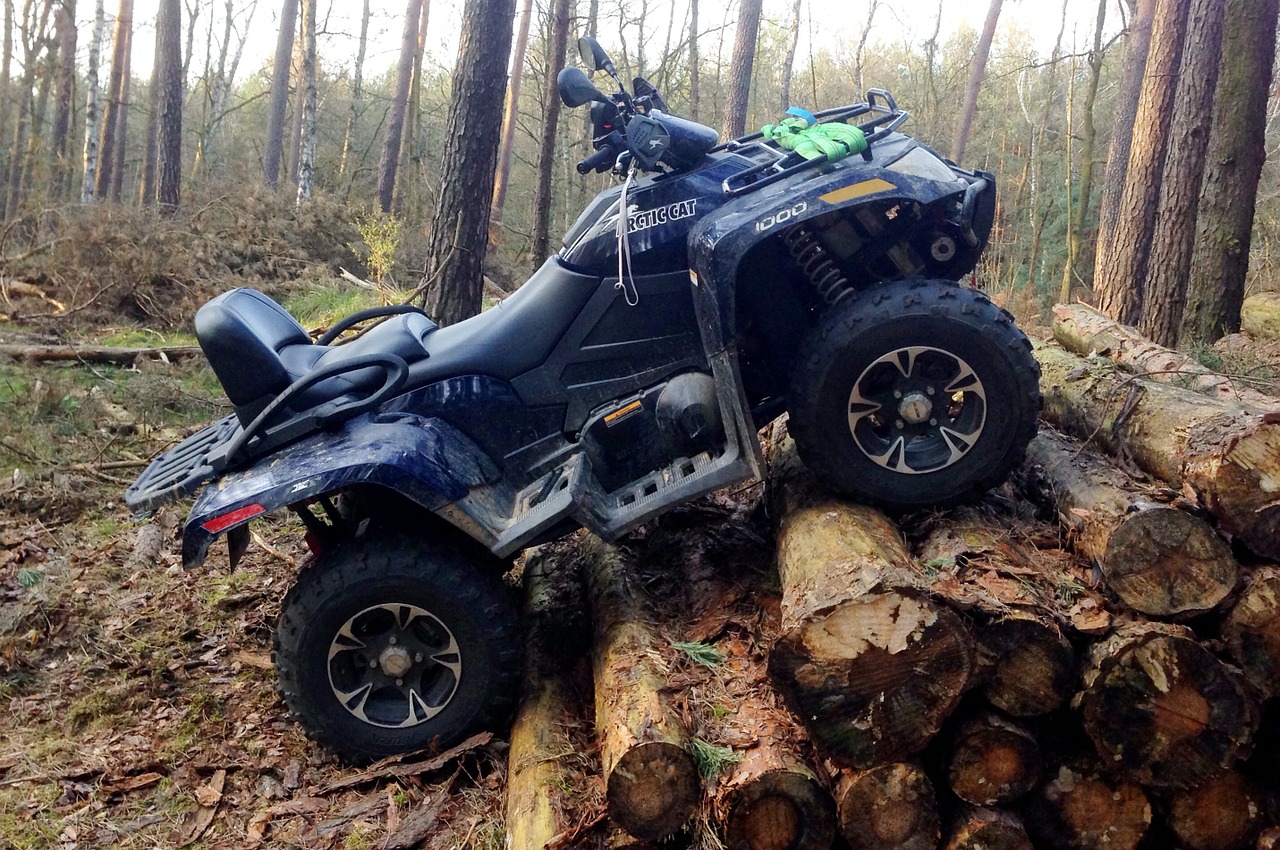
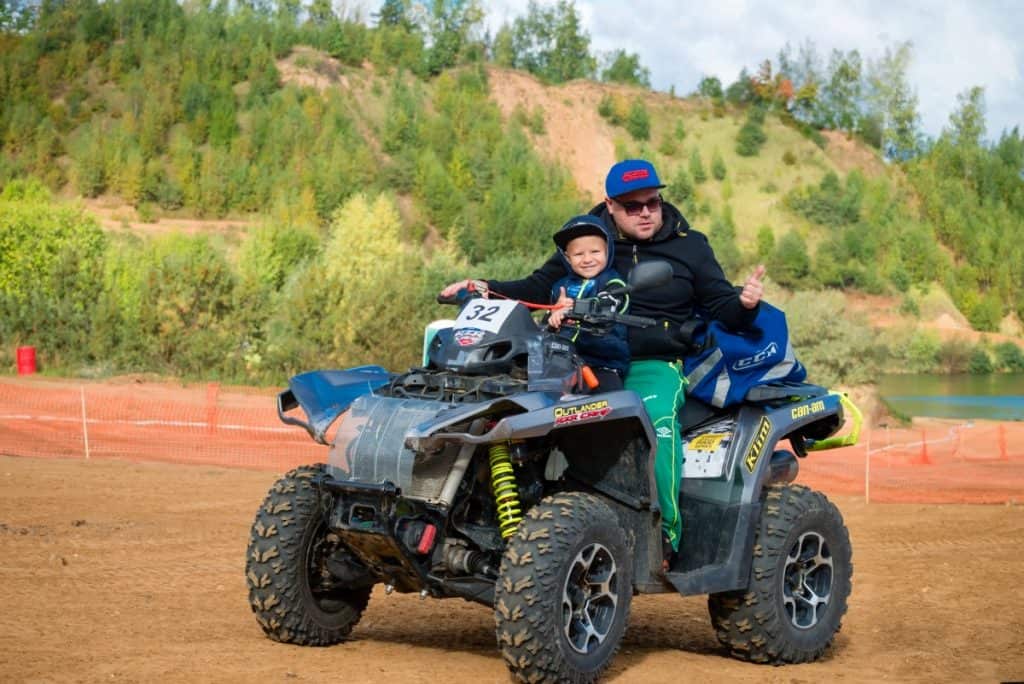
The Can-Am Outlander X MR 1000R is widely considered the gold standard of production mud bogging machinery. Straight from the factory floor in Valcourt, Canada, the X MR is engineered explicitly to conquer chest-deep slop without needing a single aftermarket modification. It is anchored by BRP’s legendary 976cc Rotax V-Twin powerplant generating 91 horsepower, delivering explosive wheel-spinning torque capable of cleaning out the heaviest clay.
The standout feature of the X MR 1000R is its factory radiator relocation kit. Positioned directly atop the front cargo rack, the massive aluminum radiator sits far above the waterline and mud spray, completely eliminating the packed-fin overheating that disables standard trail quads. Paired with arched arched front and rear double A-arms delivering a towering 15.0 inches of ground clearance, aggressive 30-inch ITP Cryptid directional paddle tires, and the selectable Visco-4Lok front differential that mechanically locks both front wheels with 100% torque split at the flip of a switch, the X MR remains virtually unstoppable.
Polaris Sportsman XP 1000 High Lifter Edition
Developed in direct partnership with High Lifter Products—the legendary Louisiana mud racing pioneer—the Polaris Sportsman XP 1000 High Lifter Edition is an uncompromising mud weapon. Producing 85 horsepower from its 952cc ProStar dual-overhead-cam twin, this machine features inverted dual snorkel riser stacks positioned directly behind the handlebar pod for maximum breathing headroom.
Polaris engineered a specialized low-range mud transmission for the High Lifter Edition. By lowering the internal gear ratios by nearly 30%, the transmission maintains high engine RPM and belt squeeze, ensuring the monstrous 29.5-inch High Lifter Outlaw 2 tires rotate through thick soup without slipping or overheating the CVT belt. Arched dual A-arms yield 13.5 inches of clearance, while twin heavy-duty front recovery bumpers provide rigid anchor points for extraction winching.
Yamaha Grizzly EPS
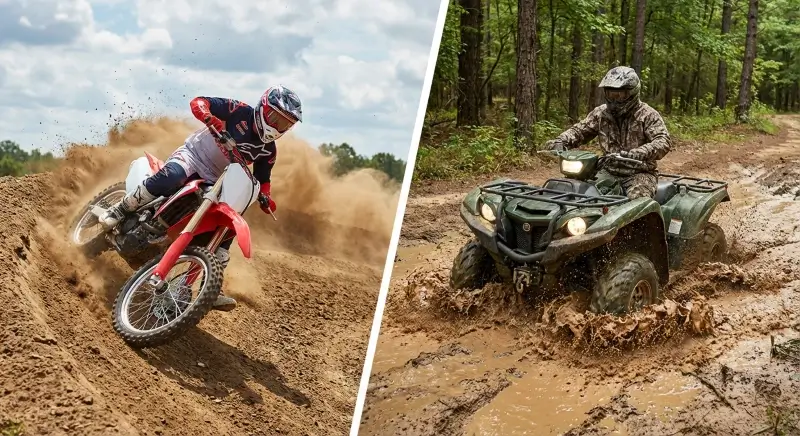
While the Yamaha Grizzly EPS does not leave the factory with exterior snorkel horns or a top-mounted radiator, it is revered by experienced mud riders as the most reliable mechanical platform ever built for swamp riding. The secret lies within Yamaha’s patented Ultramatic transmission. By incorporating an internal centrifugal wet clutch, the drive belt remains under constant, unbroken tension at all times.
Unlike competing CVT setups that rely on belt slippage during engagement—which burns flat spots onto the rubber when tires are bound by thick mud—the Grizzly engages via wet clutch shoes bathed in engine oil. Learn more about how wet clutches prevent belt burnout in ATVs under high-torque mud and utility loads. Combined with Yamaha’s mechanical On-Command 3-way differential lock and lightweight 700-pound curb mass, adding an aftermarket snorkel and radiator relocator turns the Grizzly into an indestructible mud submarine.
Honda FourTrax Foreman Rubicon 520 DCT
For riders whose primary fear in deep mud bogs is getting stranded by a drowned CVT belt enclosure, the Honda FourTrax Foreman Rubicon 520 DCT offers the ultimate engineering antidote: zero rubber drive belts. Powered by a longitudinally mounted 518cc fuel-injected engine, the Rubicon routes power through an automotive-grade Dual-Clutch Transmission (DCT) utilizing direct steel helical gears.
Because there is no rubber belt or CVT housing to breach, you can fully submerge the machine up to its airbox without ever losing forward drive. If water enters an ordinary CVT belt box, drive traction drops to zero instantly; the Honda Rubicon simply shifts directly through gears with 100% mechanical engagement. Understand how Honda’s solid-axle Foreman and independent-suspension Rubicon differ by reading our guide on the differences between Honda Rubicon and Foreman suspension architecture.
Arctic Cat Alterra 600 Mud Pro
Arctic Cat was one of the original pioneers of production mud quads with the legendary MudPro 700. The modern Alterra 600 Mud Pro continues that lineage in an accessible, mid-bore chassis. Powered by a 45-horsepower 600cc single cylinder engine engineered in St. Cloud, Minnesota, the Alterra features high-mounted intake snorkels integrated seamlessly into the front fascia.
Equipped with a factory-relocated front radiator, arched double A-arms delivering 12.8 inches of ground clearance, and 28-inch Maxxis ‘Zilla lightweight mud tires, the Alterra 600 Mud Pro delivers outstanding agility. Because it is nearly 150 pounds lighter than 1,000cc big-bore twins, it floats over soft muskeg and peat bogs where heavier machines sink straight to their skid plates.
Essential Mud Modifications
Transforming a trail four-wheeler into an elite mud conqueror requires addressing three fundamental failure points: water ingestion, cooling blockages, and differential traction loss.
High-Mount Snorkel Plumbing
A complete snorkel setup requires three independent PVC or silicone breathing tubes: engine airbox intake, CVT clutch intake, and CVT clutch exhaust. Every joint must be sealed with marine-grade RTV silicone, and differential/carburetor breather lines must be routed up to the handlebars. A single compromised seal can hydro-lock an engine in seconds.
Front-Rack Radiator Relocation
Factory radiators are mounted low behind the front bumper directly in the tire roost path. Within 15 minutes of muddy riding, clay coats the delicate aluminum cooling fins like wet concrete. Once the mud bakes, thermal dissipation drops to zero. Read our complete diagnostic guide on what temperature four-wheelers should run at and how to prevent overheating.
True Front Differential Lockers
Standard limited-slip front differentials (like early Visco-Lok) allow one wheel to spin uselessly while the loaded wheel remains stationary. In axle-deep mud ruts, you must have 100% mechanical front lockup (such as Can-Am Visco-4Lok, Yamaha On-Command, or Polaris On-Demand) so all four wheels churn at identical speed.
Directional Mud Cleat Tires
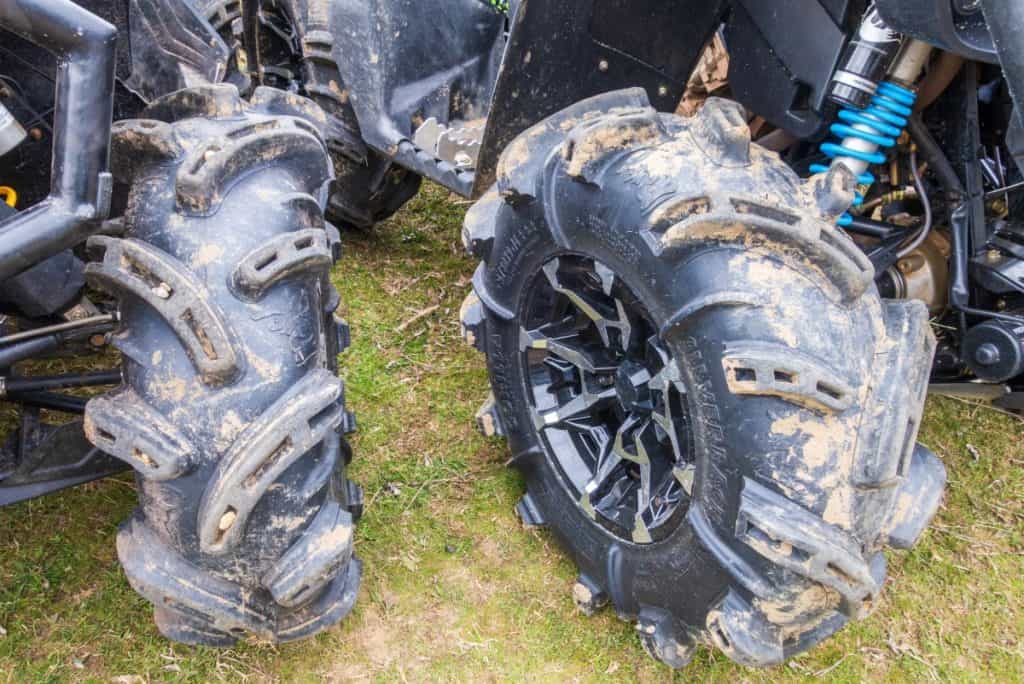
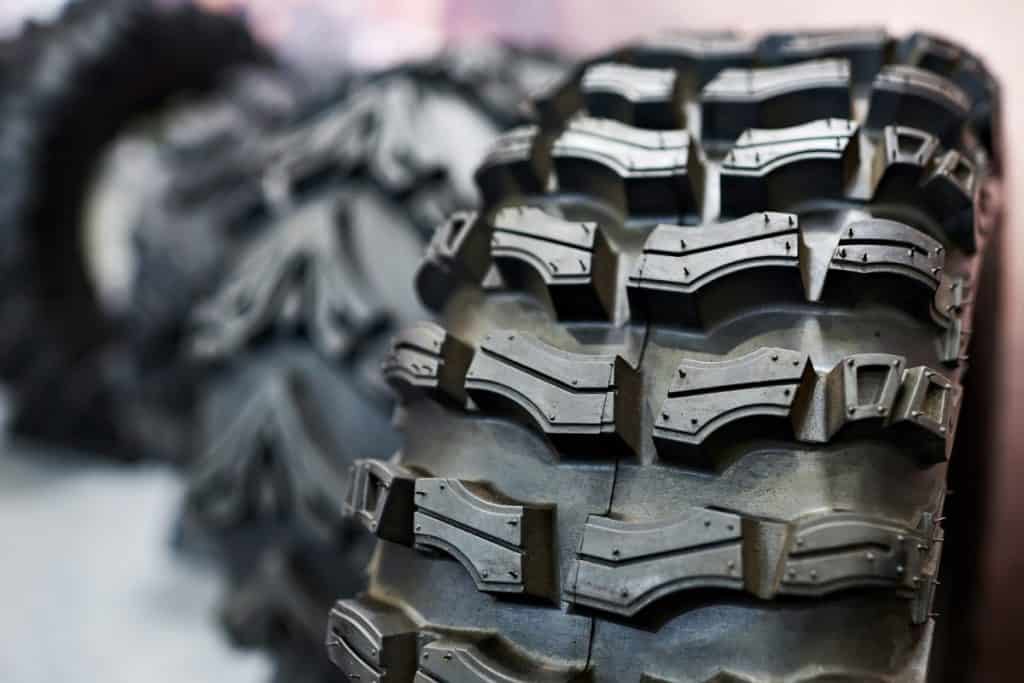
Trail tires with 0.5-inch tread depth turn into slick racing slicks in clay. Dedicated mud tires—such as ITP Cryptids, High Lifter Outlaws, or Maxxis Mudzillas—feature 1.5- to 2.0-inch stepped lugs designed to paddle through liquid and dig down to the hard packed base.
Essential Mud Riding Recovery & Protection Gear
Even the most capable 1,000cc mud quad will eventually find a bottomless hole. Equipping your ATV with waterproof recovery hardware and trail protection gear is the difference between an epic ride and an abandoned machine in the swamp:
Warn VRX 25 Heavy-Duty Winch
Full IP68 waterproof submersible construction. Packs 2,500 lbs of pulling power, all-metal planetary geartrain, and load-holding mechanical brake for extraction from suction-heavy mud holes.
Kemimoto 73L Rear Rack Cargo Bag
Heavy-duty 1680D TPU water-resistant fabric with sealed storm flaps. Includes integrated 12L soft cooler and padded compartments to keep recovery straps, tools, and extra clothes dry.
ClawsCover 420D Heavy-Duty Cover
Heavy-duty 420D Oxford waterproof cover with PU coating and taped seams. Shields your quad from trail mud bake, UV breakdown, and torrential downpours on open trailers.
Frequently Asked Questions
What makes an ATV truly good for mudding?
An exceptional mudding ATV requires five critical mechanical attributes: elevated airbox and CVT intake/exhaust snorkels to prevent water ingestion, a front-rack relocated radiator to stop mud baking, high ground clearance (12 to 15 inches) with arched A-arms, a true 100% locking front differential, and aggressive directional mud tires with 1.5-inch or deeper cleated lugs.
Can you ride a standard trail ATV in deep mud without snorkels?
No. Standard trail ATVs feature low-mounted airbox scoops and CVT clutch breathers positioned beneath the seat or near the front fenders. Submerging past wheel-hub depth risks drawing muddy water into the engine intake—causing catastrophic hydro-lock and bent connecting rods—or drowning the belt housing, which causes total transmission slippage.
Why do mud ATVs relocate their radiators to the front rack?
Factory radiators sit low behind the front bumper, directly exposed to thick muddy roost thrown by the front tires. In deep bogs, wet clay cakes between the thin aluminum radiator fins and bakes hard under engine heat. Airflow drops to zero within minutes, causing severe engine boiling. Relocating the radiator to the top front rack keeps it clean and exposed to cool ambient air.
What tire pressure should you run in ATV mud tires?
For dedicated mud bogging, tire pressures should typically be dropped to 3.5 to 5.0 PSI. Lower pressure broadens the tire contact patch, allowing the massive directional lugs to flex, clean themselves out as they rotate, and gain maximum purchase on the firm subterranean base of the mud hole without de-beading from the rim.