What Temp Should My Four Wheeler Run At? (Liquid vs. Air-Cooled Guide)
You’re five miles deep into the scrub, tires churning through sugar sand, when you see it. That red light on your dash flickers. Your stomach drops. You smell something sweet—like maple syrup—and you know exactly what it is. Your quad is cooking.
Most riders ignore their engine temperature until steam starts hissing out of the overflow bottle. That’s a mistake. Understanding your machine’s thermal limits isn’t just about avoiding a boiled-over radiator; it’s about preventing catastrophic engine failure that leaves you walking home.
The Short Answer:
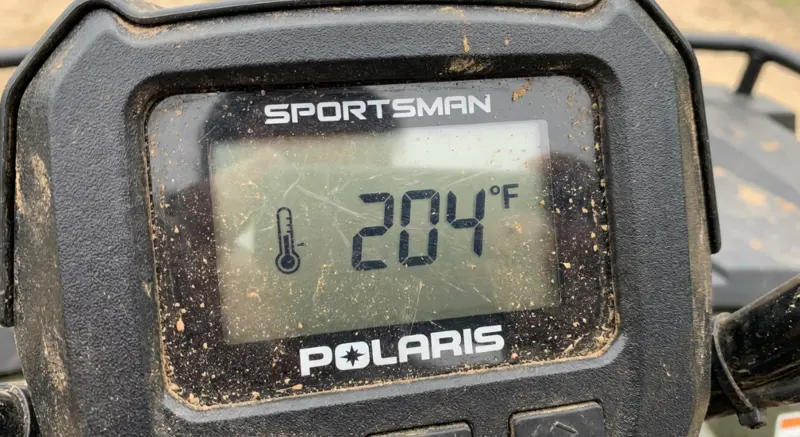
Most modern liquid-cooled ATVs operate best between 180°F and 210°F. The cooling fan typically kicks on around 205°F to bring the temp down. If your gauge hits 230°F, you are entering the danger zone. For air-cooled youth quads or older utility models, cylinder head temperatures can naturally run much higher (300°F – 380°F), but they require constant airflow to survive.
The Magic Numbers and What They Mean
You can’t fix a problem if you don’t know what “normal” looks like. The acceptable range changes entirely depending on whether you’re riding a modern fuel-injected beast or an old-school air-cooled Honda.
Liquid-Cooled ATVs (The Modern Standard)
If you are riding a Polaris Sportsman, Can-Am Outlander, or pretty much any 450cc+ sport quad made in the last 15 years, you have a liquid cooling system. This works exactly like your truck. You have a radiator, a water pump impeller, a thermostat housing, and coolant coursing through the engine block.
These engines are designed to run in a tight thermal window. They hate being cold, and they die if they get too hot.
- 180°F – 190°F: This is the sweet spot. The thermostat typically opens fully around 180°F, allowing coolant to flow from the engine to the radiator.
- 205°F – 210°F: This is where the fan activation switch usually triggers. You’ll hear the fan whir to life. This is normal, especially during slow trail riding or idling.
- 230°F+: This is the red zone. The “dummy light” on the dash usually triggers here.
- 244°F+: Most ECUs (the computer brain) will force the machine into “Limp Mode” to save the engine, cutting power drastically.
Here is a breakdown of common machines and their trigger points based on service manuals and trail data:
| Machine / Model | Normal Op. Range | Fan On | Fan Off | Limp Mode / Warning |
| Polaris Sportsman 850 | 185°F – 205°F | 205°F | 190°F | ~235°F |
| Can-Am Outlander (Rotax) | 178°F – 208°F | 208°F | 200°F | 244°F |
| Yamaha Raptor 700 | 180°F – 215°F | ~220°F (Stock) | 205°F | 240°F |
| Honda Rancher (Liquid) | 185°F – 203°F | 205°F | 195°F | 230°F |
Air-Cooled & Oil-Cooled Engines (The Old School Workhorses)
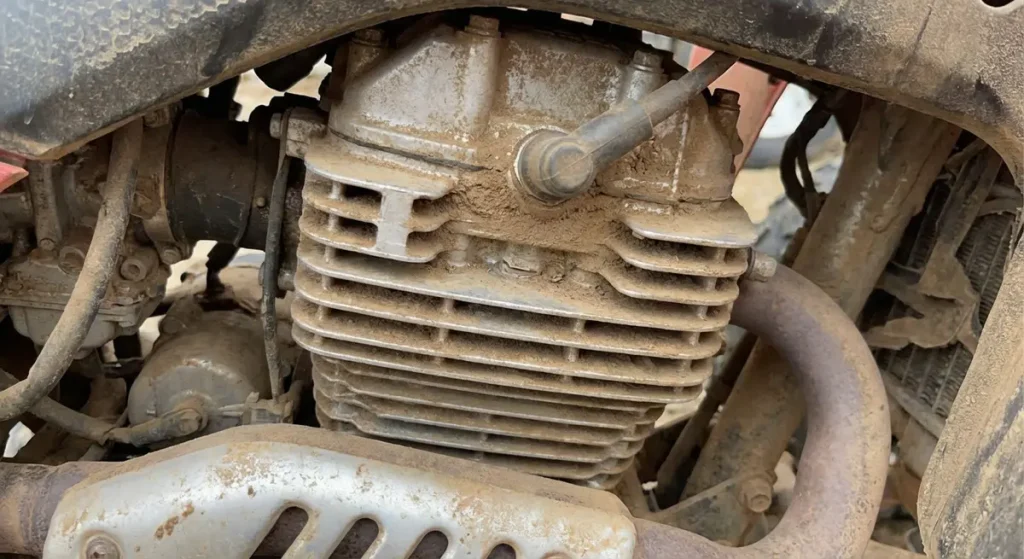
If you’re on a Honda TRX250X, a Yamaha Raptor 90, or almost any youth ATV, you don’t have a radiator. You have fins on the cylinder head. These engines rely 100% on airflow.
Because there is no water jacket to stabilize the temp, these engines run hot. Really hot.
- Cylinder Head Temp: It is perfectly normal to see temps between 300°F and 380°F at the spark plug base.
- Oil Temp: This is the number that matters. If your oil temp exceeds 250°F, conventional oil begins to suffer from viscosity breakdown. The oil thins out like water and stops protecting your bearings.
How to Tell If You Are Overheating Without a Gauge
Most ATVs, especially the utility models, don’t give you a number. They give you a vague red light that pops on when it’s already too late. You need to develop a “mechanic’s sense” for when your machine is heat soaking.
The Sensory Checklist
1. The Smell
This is the biggest tell. If you smell maple syrup, that’s coolant boiling out of the overflow bottle or the weep hole on the water pump. If you smell burning rubber, that’s usually your CVT belt slipping because the clutch case is overheating. If you smell “hot iron” or burning oil, your engine oil is cooking.
2. The Sound
A hot engine sounds different. As the oil thins out, the valve train gets noisier. You might hear a “ticking” sound from the top of the motor. In extreme cases, you’ll hear detonation or “pinging.” It sounds like marbles rattling in a tin can when you hit the gas. That’s the fuel exploding prematurely because the cylinder is so hot. If you hear this, stop immediately.
3. The Feel
If you are wearing shorts (which you shouldn’t be), you’ll feel the radiant heat on your inner calves. But pay attention to the performance. A heat-soaked engine often loses power. It feels sluggish on the throttle, like it’s gasping for air. This is often because the intake air charge is so hot it’s less dense, making the bike run rich and lethargic.
What to Do When the Light Comes On
I’ve been there. I was ten miles out in the Wayne National Forest in Ohio, mud caked on everything, and my buddy’s KingQuad lit up like a Christmas tree. Panic sets in. You want to kill the engine immediately. Don’t.
Here is the proper protocol to save your engine without cracking the head:
Step 1: Stop Moving, But Keep Idling (Usually)
If the red light comes on, pull over safely. If the machine is liquid-cooled and the fan is screaming, let the engine idle for 30-60 seconds. Why? Because if you shut the engine off, the water pump stops turning. The coolant sitting next to the super-hot cylinder walls stops moving and boils instantly (this is called “after-boil”). By idling, you keep the fluid cycling through the radiator to cool down.
Exception: If you are losing fluid rapidly (steam geyser) or hear terrible metallic noises, kill it instantly.
Step 2: Check for the “Mud Blanket”
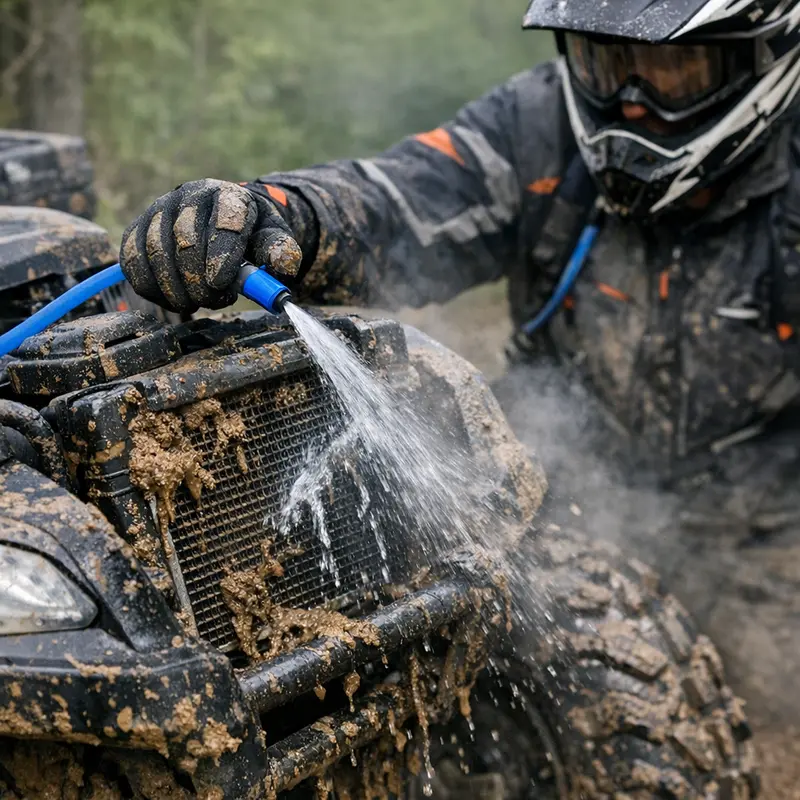
In Ohio, we deal with clay. When that clay hits a hot radiator, it bakes into a brick. I’ve seen guys overheat simply because the front of their radiator looked clean, but the back (where the fan is) was packed solid.
- The Fix: Use your hydration pack or a water bottle. Squirt water through the radiator fins from the back side pushing forward. You need to clear that airflow.
Step 3: The Airlock Squeeze
If you recently did maintenance or tipped the quad on its side, you might have an air bubbles in the cooling system. Air doesn’t transfer heat.
- The Fix: With the engine off and cool enough to touch, squeeze the upper radiator hose repeatedly. You’re trying to burp the air bubble past the thermostat housing.
Common Causes of Overheating (Terrain Specifics)
Your environment dictates your temperature. Riding in the Florida Panhandle is a totally different thermal game than crawling through tight woods in Appalachia.
The “Sand Drag” Factor (Florida/Dunes)
When we ride down in Ocala or Croom, we are dealing with sand. Sand creates massive resistance. Your tires are constantly spinning, meaning your engine is running at high RPMs, but your actual ground speed is lower.
- The Problem: High engine load + lower wind speed = rapid heat spikes.
- Robert’s Take: “I see this all the time with 450s in the sand pits. Guys run paddle tires that are too aggressive. The engine has to work twice as hard to turn them. If you ride deep sand, you need a high-pressure radiator cap (1.6 or 1.8 bar) to raise the boiling point of your coolant.”
The “Mud Blanket” Effect (Ohio/Woods)
In the woods, speed is low. You rarely get out of second gear. You rely entirely on your electric fan.
- The Problem: Mud blocks the airflow. Also, winching draws massive amps. If your battery gets weak from winching, the fan might not spin at full speed.
- Robert’s Take: “If you are a mud guy, you have to look at a radiator relocation kit. It moves the radiator up to the front rack. It looks aggressive, but it’s the only way to keep the fins clean when you’re frame-deep in a skeg pit.”
Essential Maintenance to Keep It Cool
You don’t need to be a factory mechanic to keep your temps in check. You just need the right tools and the right fluids.
Tools You Need
Stop guessing. You cannot touch the engine case and say “Yeah, that feels like 220.”
- Infrared Temp Gun: Every trail bag needs one. They are cheap. Pro Tip: Don’t aim it at the exhaust header (that will always be 500°F+). Aim it at the thermostat housing or the cylinder head right near the spark plug. That gives you the real number.
- Inline Coolant Temp Gauge: For about $40, you can cut your radiator hose and install an analog gauge. This gives you real-time data so you can stop before the red light comes on.
Fluid Choices Matter
Not all green juice is the same.
- Standard Coolant: Usually a 50/50 mix. Fine for casual trail riding.
- Engine Ice / Water Wetter: These are aftermarket additives. I swear by Engine Ice for my race quads. It’s a propylene glycol base that can drop operating temps by 10-20 degrees. It handles the “heat soak” better than standard ethylene glycol.
- The Air-Cooled Trick: If you run an air-cooled Honda Rancher or foreman, run a high-quality synthetic oil (like Rotella T6 or Amsoil). Synthetic oils handle high heat way better than conventional mineral oils without breaking down.
Youth ATVs & Heat Safety
This is where I get serious. If you are a dad or mom teaching a kid to ride, you need to watch their machine like a hawk.
Youth quads (50cc to 90cc) are almost exclusively air-cooled. But here is the catch: Kids ride slow.
They putter around at 3 MPH. That engine is getting almost zero airflow. I have seen CVT covers on youth quads get so hot they melt the plastic fairings touching them.
The “Stop & Cool” Rule:
If your kid needs a water break, the bike needs a cool-down break. Shut it off. Don’t let it idle while you adjust their helmet.
Burn Prevention:
Those little exhaust pipes get nuclear hot. On many Chinese-built youth quads, the heat shield is flimsy. Make sure your child is wearing dedicated riding pants with leather inner knees/heat shields. Synthetic gym shorts will melt instantly if they brush against a 400°F header pipe.
FAQ
Can I use car antifreeze in my ATV?
Generally, yes, but you must check the label. You need “Silicate-Free” coolant. Many automotive coolants contain silicates (scrubbing agents) that can damage the ceramic seals in a motorcycle or ATV water pump. Look for coolants safe for aluminum engines.
Why is my fan not turning on?
It’s usually one of three things: a blown fuse (start there), a bad temperature sensor (the switch that tells the fan to go), or the fan motor itself is burnt out from mud ingestion. You can test the fan by running jumper wires directly from the battery to the fan plug. If it spins, your sensor or relay is bad.
Is it safe to pour water on my engine to cool it down?
No! Pouring cold creek water directly onto a scorching hot aluminum engine case can cause thermal shock. The metal can contract too fast and crack. You can spray water on the radiator fins, but avoid dumping cold water directly on the engine block or cylinder head.
My quad boils over but the light never comes on. Why?
This usually means your radiator cap is bad. The cap holds pressure (usually 1.1 bar). If the seal is worn, it can’t hold pressure, and the coolant will boil at a much lower temperature (212°F) instead of the elevated temperature (250°F+) it can handle under pressure. Replace the cap; it’s a $15 fix.
How hot is too hot for CVT belt exhaust?
If you have a belt temp gauge (common on side-by-sides and big bore quads), you want to stay under 200°F. At 220°F, the rubber compound starts to degrade. Above 250°F, you are moments away from shredding the belt into confetti.